
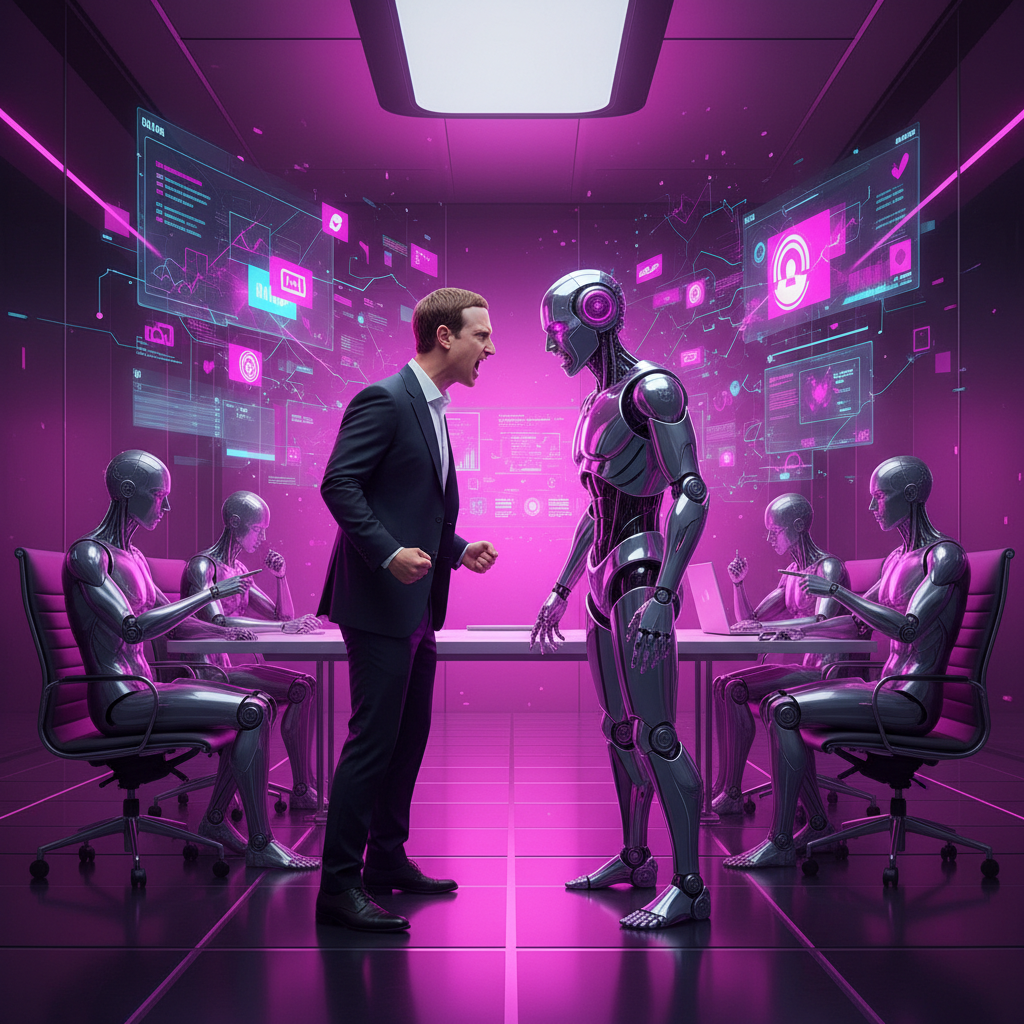
The Rise of AI Marketing Agents: Your New Digital Employees for Agentic Marketing Automation
1. Introduction: Ushering in the Era of Autonomous Marketing
The digital marketing landscape is undergoing a massive transformation. Oving at a speed that is unprecedented in the history of business. For years, marketers have relied on static software and basic automation to streamline their daily tasks. However, a rapid evolution is taking place, shifting the paradigm from simple, passive tools to dynamic, intelligent systems. We are now entering the era of ai marketing agents, which represent the next frontier in marketing technology. These advanced artificial intelligence systems are moving beyond mere data processing. They are becoming proactive. Ntelligent entities that can make decisions and execute complex strategies. As businesses seek to optimize their operations. Maximize their return on investment, these agents are stepping in to fill the role of digital employees ai. By acting as a highly capable extension of your human team. Hey are fundamentally transforming how organizations approach their marketing efforts. Instead of waiting for a human to input a command, these sophisticated systems anticipate needs and take action. This proactive approach introduces the concept of agentic marketing automation. Strategic shift that moves away from rigid. Ules-based workflows toward fluid, goal-oriented processes. By embracing this new level of automation. Ompanies can achieve hyper-personalization at scale. Ptimize their customer journeys in real-time. Stay miles ahead of the competition. Early adoption of artificial intelligence in the business world focused almost exclusively on specific. Arrow tasks like basic data entry. Simple customer service chatbots. But the modern trend is moving swiftly towards much more autonomous. Apable systems that can manage entire operational ecosystems.
Research indicates that while early AI adoption focused on specific, isolated tasks, the current. Future trend is heavily skewed towards implementing fully autonomous systems that drive strategic value. For more insights on this technological shift. Ou can read about the evolution of AI in marketing at Forbes Tech Council.
2. What Are AI Marketing Agents? More Than Just Tools
Additionally, to truly understand the impact of this technological revolution. E must first define what exactly we mean when we talk about ai marketing agents. Unlike the traditional software you might be used to. Hese agents are sophisticated. Utonomous software programs specifically designed to perform complex marketing tasks. Achieve overarching marketing goals with absolute minimal human intervention. They are not just tools that you use; they are systems that work alongside you. This is why they are increasingly being referred to as the ultimate digital employees ai. To grasp their full potential. T is essential to look at their core characteristics that set them apart from legacy systems.
- Autonomy: The ability to operate entirely independently is perhaps the defining feature of these systems. Once you give them access to your data and define the parameters, they can run campaigns, adjust budgets, and analyze performance without needing a human to constantly monitor and approve every single micro-action.
- Proactivity: Traditional automation only acts when a specific trigger occurs. In contrast, these modern agents are proactive. They initiate actions based on the goals you have set. If they notice a sudden drop in website traffic or a dip in conversion rates, they do not just send an alert; they can actively tweak ad copy, adjust bidding strategies, or suggest new keywords to rectify the issue immediately.
- Goal-Orientation: These systems are intensely focused on achieving predefined marketing objectives. Whether your goal is to generate more qualified leads, increase total sales revenue, or boost overall brand awareness, the agents will continuously calculate and execute the best possible path to reach that specific destination.
- Learning & Adaptation: Driven by advanced machine learning algorithms, these agents are constantly improving their own performance through rigorous, continuous data analysis. Every interaction, every click, and every conversion is a data point that helps them refine their future strategies, making them smarter and more efficient every single day.
It is very important to contrast these advanced capabilities with traditional marketing automation software. A standard email scheduler.. Instance. Equires a human to write the email. Et the time. Define the audience list. It only does exactly what it is told. On the other hand. N autonomous agent can analyze your audience data. Etermine the optimal send time for each individual user. Raft personalized email copy based on past behavior. Automatically send the campaign to maximize open rates. Highlighting these advanced decision-making capabilities clearly establishes why these systems are considered true digital employees. They don’t just execute; they think, strategize, and optimize.
Leading academic and technological institutions define this new wave of technology as systems that are capable of taking independent actions to achieve high-level goals. For a deeper, concise definition of agentic AI and its direct applications to business. Marketing environments, review the extensive research available at MIT Technology Review.
3. The Evolution: From AI Tools to Digital Marketing Employees
Furthermore, the journey of artificial intelligence within the digital marketing sphere has been nothing short of spectacular. If we trace the evolution of these technologies, we can see a clear and rapid progression. In the early days, marketers were introduced to basic analytical tools. These systems were great at data processing. Could provide simple recommendations, like telling you which demographic clicked on your ads the most. They were helpful, but they still required a massive amount of human interpretation. Manual labor to turn those insights into actionable marketing campaigns. From there, the technology evolved into prescriptive tools. These systems could look at the data analytics. Actually suggest specific actions, such as recommending a budget increase for a top-performing ad set. However, the marketer still had to be the one to physically log in and make the changes. Today, we have entered an entirely new paradigm. We have moved from mere suggestions to execution. We now have truly capable digital employees ai that can autonomously execute incredibly complex marketing strategies from start to finish. This monumental shift in capability is what enables modern businesses to begin the formation of a comprehensive ai marketing workforce.
This evolution is significant because these modern digital employees can handle tasks that were previously thought to require human-level judgment, intuition, and creativity. For example, in the realm of content ideation, these systems can analyze search trends, competitor content. Social media chatter to propose highly relevant. Engaging blog topics that are guaranteed to resonate with your target audience. In campaign optimization, they do not just shift budgets; they rewrite ad copy, redesign visual creatives. Alter targeting parameters on the fly to ensure maximum return on investment. Furthermore, they excel in customer service by providing instant, highly personalized responses to complex inquiries. They handle performance reporting by generating easy-to-understand narratives that explain the why behind the data. Ather than just presenting a spreadsheet full of numbers.
Thus, the increasing role of artificial intelligence in taking on complex. Uman-like roles within business operations is well-documented by major consulting firms. For an in-depth look at how AI adoption is shaping the future of work. Specifically transforming marketing departments, check out the comprehensive reports from Deloitte Insights.
4. Building an AI Marketing Workforce: Collaborative Automation
Moreover, when we talk about the future of digital marketing. T is crucial to understand that an ai marketing workforce is not just a single. Onolithic entity. A single piece of software. Instead, it is a dynamic. Ighly integrated collection of specialized ai marketing agents working perfectly in concert with one another. To visualize this, imagine a bustling marketing department. In this digital department. Ifferent agents are assigned specific. Pecialized roles that are remarkably akin to human team members. Each agent has its own area of expertise, its own goals. Its own set of tools, yet they all communicate and collaborate seamlessly to achieve the company’s overarching objectives. This collaborative approach is the true essence of modern marketing efficiency.
To truly appreciate the synergistic potential of this setup. Et us focus on the specific roles these agents can play within your organization:
- Content Agent: Think of this as your tireless copywriter. This agent continuously generates highly relevant blog topics based on real-time SEO data, drafts compelling ad copy for multiple platforms, creates engaging email newsletters, and even scripts video content. It ensures your brand’s voice remains consistent while producing high-quality content at an unprecedented scale.
- SEO Agent: This is your technical optimization specialist. It works around the clock conducting deep keyword research, optimizing on-page elements like meta tags and headers, analyzing competitor backlink profiles, and suggesting structural changes to your website to ensure you rank at the top of search engine results pages.
- Social Media Agent: Acting as your dedicated community manager, this agent schedules posts across various networks at the precise times your audience is most active. But it does more than just schedule; it analyzes audience engagement, spots emerging viral trends, responds to routine comments, and continuously suggests new, creative strategies to boost follower growth and brand loyalty.
- Campaign Optimization Agent: This is your data-driven media buyer. It autonomously runs thousands of A/B tests on ad variations simultaneously. It monitors performance metrics in real-time and automatically adjusts bidding strategies and reallocates budgets across different platforms to ensure you are getting the lowest cost-per-acquisition possible.
By bringing all of these specialized entities together. Usinesses facilitate a level of advanced agentic marketing automation that was previously unimaginable. The SEO agent informs the Content agent about which keywords to target. He Content agent passes the generated assets to the Social Media and Campaign Optimization agents. All of them feed performance data back into the central system to continuously refine the overarching strategy. This collective action is what transforms a group of tools into a true workforce.
Additionally, companies are already beginning to structure their artificial intelligence initiatives to strictly mimic traditional human team structures. Eading to massive enhancements in operational efficiency. To read more about how AI is fundamentally restructuring marketing teams. Workflows. Isit the industry experts at MarketingProfs.
5. The Power of Agentic Marketing Automation: Revolutionizing Operations and Reporting
In addition, now that we understand the structure of this new workforce. E must delve deeply into the concept of agentic marketing automation itself. We can define this revolutionary approach as the strategic. Ystematic implementation of autonomous ai marketing agents to completely streamline, aggressively optimize. Flawlessly execute complex marketing processes end-to-end. This is the exact point where digital employees ai truly shine. Prove their immense value to an organization. They take the theoretical benefits of automation and turn them into tangible, massive bottom-line results.
Key Impact Areas
The impact of this technology is felt across every single facet of a marketing department. There are two primary areas where the revolution is most obvious:
- Automated Marketing Operations: The most significant benefit is how these agents can autonomously manage entire, multi-channel marketing campaigns from their initial conceptualization right through to their final completion. This includes incredibly complex tasks like dynamic lead nurturing based on behavioral triggers, creating highly personalized email sequences that adapt based on recipient responses, optimizing real-time ad placement across hundreds of websites, and orchestrating entirely unique customer journeys for every single user. By taking over these intricate, time-consuming operational tasks, the technology completely frees up human marketers to focus entirely on high-level strategy, creative direction, and brand building.
- Advanced Reporting and Analytics: Gone are the days of spending hours compiling spreadsheets. Explain how these intelligent agents can autonomously gather massive amounts of raw data from dozens of disparate sources, identify hidden trends that a human eye might miss, generate beautiful, custom reports tailored to different stakeholders, and proactively flag anomalies or lucrative opportunities. The crucial difference here is that they do not just present data; they interpret the data, provide the context, and most importantly, they often suggest the exact actions you should take based on those insights.
In fact, to elaborate further, consider specific examples of how tasks that were once entirely manual. Incredibly time-consuming are now handled flawlessly by agents. For instance, dynamic ad creative generation allows the system to swap out images, headlines. Call-to-actions in real-time based on the exact demographic profile of the person viewing the ad. Real-time budget re-allocation means that if a particular campaign suddenly goes viral on a Sunday night. He agent will instantly funnel more money into that campaign to maximize the return. Ithout waiting for a human media buyer to log in on Monday morning. Furthermore, these systems create personalized customer interaction flows that make every single prospect feel as though they are receiving a bespoke, one-on-one service experience.
Businesses adopting agentic automation are reporting unprecedented gains in efficiency and massive reductions in operational costs. For detailed statistics and research on the massive efficiency gains. Cost savings associated with AI in marketing operations. Eview the extensive market data available at Forrester Research.
6. Strategic Implementation: Unleashing Your AI Marketing Workforce
Understanding the immense power of this technology is only the first step. The real challenge, and the ultimate key to success, lies in the strategic implementation. Businesses looking to integrate an ai marketing workforce must realize that this goes far beyond simply purchasing. Turning on individual ai marketing agents. It requires a fundamental shift in company culture, operational infrastructure, and strategic planning. To ensure a successful integration, companies must follow a carefully considered, multi-step approach.
Key Steps and Considerations
- Defining Goals: Before implementing any new technology, you must clearly and explicitly outline what exact marketing objectives these agents will help you achieve. Are you looking to decrease your customer acquisition cost by 20 percent? Do you want to increase your organic website traffic by 50 percent? By setting clear, measurable goals, you give your digital employees a precise target to aim for, ensuring their actions are aligned with your broader business strategy.
- Data Infrastructure: Artificial intelligence is entirely dependent on the data it consumes. Therefore, you must strongly emphasize the absolute need for clean, organized, and highly integrated data to feed these agents. If your customer data is scattered across five different, disconnected platforms, the agents cannot form a complete picture of the customer journey. Investing in a robust data warehouse or customer data platform is a non-negotiable prerequisite for successful agentic automation.
- Ethical AI Use: As these systems become more autonomous, ethical considerations become paramount. You must actively discuss and implement policies regarding algorithmic transparency, rigorous bias detection to ensure your campaigns are fair and inclusive, and strict adherence to customer privacy regulations. Your customers must trust that you are using their data responsibly.
- Human-AI Collaboration: It is vital to stress internally that these systems are meant to powerfully augment, not entirely replace, your human teams. The goal is empowerment, not elimination. With the heavy lifting of execution handled by the software, the role of the human marketer shifts dynamically toward high-level oversight, emotional intelligence, strategic planning, and injecting true creative input that a machine simply cannot replicate.
- Phased Rollout: Trying to automate your entire marketing department overnight is a recipe for disaster. We strongly suggest starting with smaller, well-defined projects before attempting to scale. Perhaps start by letting an agent optimize your email send times. Once that proves successful and your team is comfortable with the technology, move on to letting an agent manage a small portion of your paid advertising budget. Gradual integration ensures smooth adoption.
As a result, the most successful companies are those that master the delicate balance of human-machine interaction. For comprehensive best practices on fostering productive human-AI collaboration in the workplace. To understand the critical importance of continuously upskilling your human employees. Ead the managerial guidelines published at Harvard Business Review.
7. The Future of Marketing: AI as the Core Engine
As we look toward the horizon. T is abundantly clear that the marketing landscape of tomorrow will be unrecognizable compared to today. We can vividly paint a picture of the near future where incredibly sophisticated ai marketing agents are not just an optional add-on. Rather the fundamental, beating heart of absolutely every marketing strategy. Envision a business scenario where an entire. Ultifaceted ai marketing workforce operates completely seamlessly in the background. Ntirely driven by advanced agentic marketing automation. In this future, the mundane, repetitive tasks are entirely eliminated. Human marketing teams are liberated from the drudgery of spreadsheets. Manual scheduling. Llowing them to focus 100 percent of their energy. Intellect on high-impact innovation. Eep emotional brand building. Navigating incredibly complex strategic business decisions.
When we elaborate on the true potential of this future state, the possibilities are staggering. We are moving rapidly toward an era of truly predictive marketing. Instead of reacting to trends after they happen. Our systems will analyze global data to accurately predict consumer behavior months in advance. Llowing you to position your products perfectly before the demand even spikes. We will see hyper-personalized customer experiences delivered effortlessly at an unprecedented global scale. Imagine a website that completely rebuilds its layout, copy. Product offerings in milliseconds to perfectly match the psychological profile of the individual visitor. Furthermore, this technology will grant businesses unprecedented market responsiveness. Llowing them to pivot entire global campaigns in a matter of minutes based on shifting geopolitical events or sudden cultural trends. The competitive advantage granted to early adopters of this technology will be absolutely insurmountable.
As a result, leading visionaries agree that the economic impact of these technologies will be monumental. To explore how leading AI experts. Futurists envision artificial intelligence acting as the core engine for the next decade of explosive business growth. Marketing innovation, delve into the insights provided by McKinsey & Company.
8. Conclusion: Embrace the Power of Your New Digital Marketing Colleagues
In summary, the rapid emergence of sophisticated ai marketing agents represents a fundamental. Rreversible shift in the business landscape. These powerful systems are entirely revolutionizing the industry by acting as highly capable, incredibly autonomous digital employees ai. By moving beyond simple task execution. Hey are enabling a new era of sophisticated agentic marketing automation. Ompletely transforming how businesses connect with their audiences. By strategically assembling and deploying an integrated ai marketing workforce. Ompanies can unlock a level of performance that was previously impossible. We must reiterate the profound. Ame-changing benefits of this technology: massive increases in operational efficiency. Ncredibly deeper. More actionable data insights. A level of strategic agility that allows you to outmaneuver your competitors at every turn. The future belongs to those who adapt.
For example, are you ready to stop falling behind and start dominating your market? It is time to encourage your business to explore. Strategically adopt these incredible technologies to stay competitive in the rapidly evolving digital landscape. Don’t let your competitors build their digital workforce before you do. Contact BoosterDigital today to learn exactly how we can help you integrate powerful automation. Ransform your marketing operations. Nd skyrocket your revenue. Let’s build your AI-powered future together. Visit us at booster-digital.com to get started.