
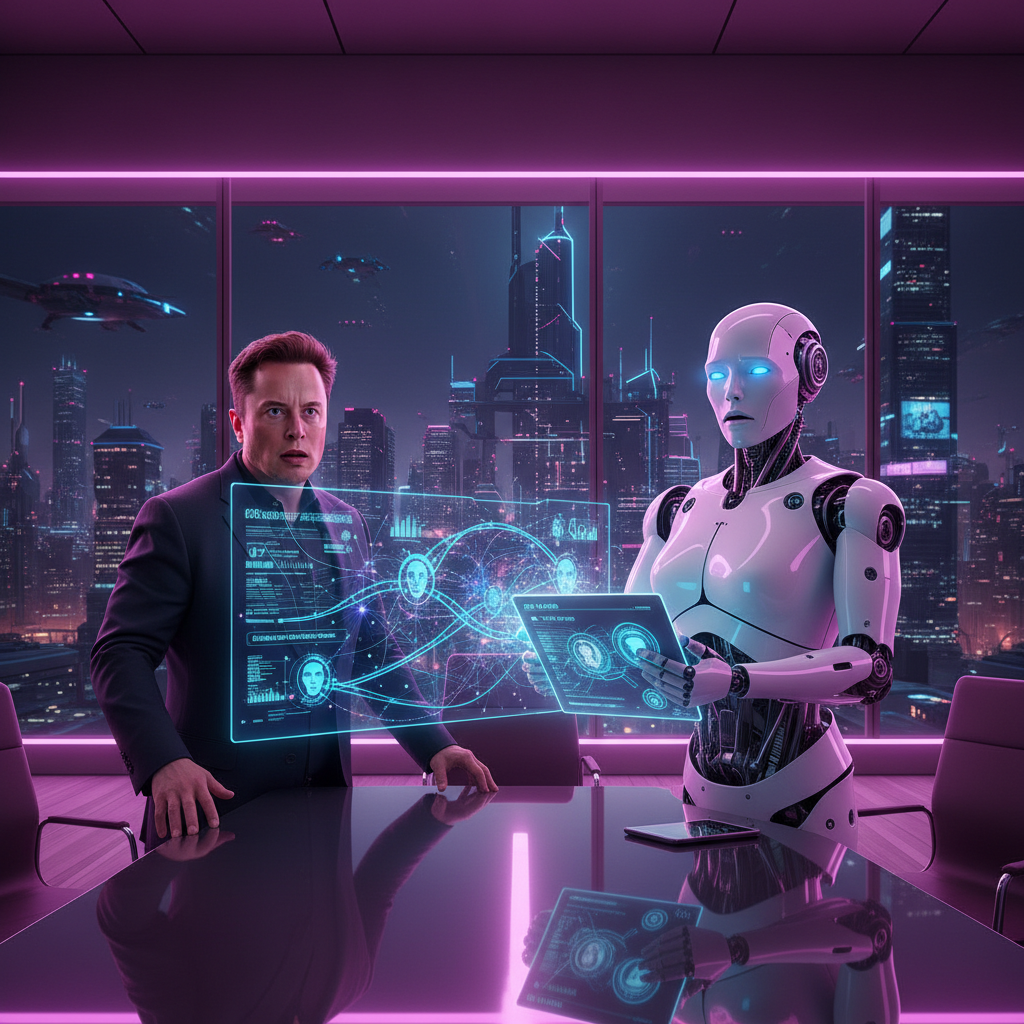
Revolutionizing the Customer Journey: The Power of AI Customer Journey Automation for Lifecycle Optimization and Conversion Growth
The modern marketplace is a battlefield of expectations. Today’s customers do not just prefer personalized experiences; they demand them. They expect brands to know who they are, remember their preferences, and anticipate their needs before they even express them. For many businesses, keeping up with this level of demand using manual processes or static rules is no longer just difficult—it is impossible.
This is where ai customer journey automation changes the game.
As we navigate an increasingly digital-first world, the ability to deliver a seamless, intuitive experience across every touchpoint is the primary differentiator between businesses that scale and those that stagnate. Artificial Intelligence (AI) has moved beyond being a buzzword to become the operational backbone of successful customer relationship management.
AI customer journey automation is the strategic application of intelligence to design, execute, and optimize customer interactions throughout the entire lifecycle. From the moment a prospect sees an ad to the moment they become a loyal advocate, AI is there to guide the path.
In this guide, we will explore how this technology enables comprehensive ai lifecycle automation and drives significant ai conversion optimization. You will learn how to transform your business into a customer-centric powerhouse, ensuring that every interaction adds value and drives growth.
1. Understanding AI Customer Journey Automation: A New Era of Personalization
To truly leverage the power of this technology, we must first define what ai customer journey automation actually is and, perhaps more importantly, what it is not.
Traditionally, marketing automation relied on static, rule-based logic. It looked something like this: \”If a customer downloads an eBook, send Email A.\” While this was an improvement over manual emailing, it lacked nuance. It treated every customer who downloaded that eBook exactly the same, ignoring their unique context, purchase history, or current intent.
The AI Difference: From Static Rules to Dynamic Learning
AI customer journey automation represents a quantum leap forward. It utilizes advanced technologies such as:
- Machine Learning (ML): Algorithms that improve automatically through experience and the use of data.
- Natural Language Processing (NLP): The ability for computers to understand text and spoken words in much the same way human beings can.
- Predictive Analytics: The use of data, statistical algorithms, and AI techniques to identify the likelihood of future outcomes based on historical data.
Instead of following a rigid \”if-this-then-that\” structure, AI learns and adapts in real-time. It analyzes thousands of data points instantly to make decisions. It doesn’t just ask, \”Did they download the eBook?\” It asks, \”What industry are they in? How long did they spend reading it? Have they visited the pricing page recently? What time of day do they usually open emails?\”
Moving to a Holistic View
This shift moves businesses away from a fragmented approach where marketing, sales, and support operate in silos. Instead, it fosters a holistic, customer-centric view. AI lifecycle automation ensures that the intelligence gathered in the marketing phase informs the sales conversation, which in turn informs the support experience.
The impact of this shift is measurable and profound. Customers are rewarding businesses that use AI to tailor their experiences.
Research Insight: The demand for personalization is undeniable. According to Epsilon, 80% of consumers are more likely to make a purchase when brands offer personalized experiences. This underscores the necessity of AI in delivering these tailored interactions at scale. Source: Epsilon
2. The Scope of AI Lifecycle Automation: Transforming Every Touchpoint
Many businesses make the mistake of limiting automation to email sequences. However, true ai lifecycle automation is a comprehensive strategy that orchestrates and optimizes every single stage of the customer’s interaction with your brand.
From Awareness and Consideration to Purchase, Retention, and Advocacy, AI acts as the conductor of the orchestra, ensuring every section plays in perfect harmony. This unified view breaks down the traditional barriers between departments, allowing data to flow freely and inform decisions across the board.
Key Components of AI Lifecycle Automation
To achieve this holistic transformation, ai customer journey automation relies on three main pillars:
1. Data Integration and Analysis
AI is only as good as the data it feeds on. A robust system collects data from every available touchpoint. This includes:
- Website behavior (clicks, time on page, bounce rates).
- Social media interactions (comments, likes, shares).
- Email engagement (opens, click-throughs).
- Transactional history (past purchases, average order value).
- Customer support tickets and chat logs.
AI synthesizes this vast ocean of information to build a dynamic, 360-degree profile of every single customer. This profile is not static; it evolves with every new interaction.
2. Predictive Analytics
This is where ai lifecycle automation truly shines. Once the data is analyzed, AI uses predictive models to forecast future behavior. It can determine:
- Propensity to Purchase: How likely is this lead to buy in the next week?
- Churn Risk: Is this customer showing subtle signs of leaving for a competitor?
- Next Best Action: What is the single most effective thing we can do for this customer right now?
3. Personalized Orchestration
Insight without action is useless. AI takes the predictions and automatically triggers the most relevant response. This isn’t just sending an email; it’s about delivering the right message, on the right channel, at the exact right time. It might mean showing a specific pop-up on the website, sending a push notification, or alerting a sales representative to make a call.
3. AI Conversion Optimization: Boosting Results Across the Journey
While improving the experience is vital, the ultimate goal of business is growth. AI conversion optimization is the engine that drives this growth by maximizing the value of every interaction.
AI conversion optimization is the application of machine learning to analyze user behavior, identify friction points in the funnel, and automatically implement strategies to increase desired actions. Unlike traditional optimization which relies on human guesswork and slow A/B testing, AI moves at the speed of data.
Going Beyond A/B Testing
Traditional A/B testing involves checking one variable against another—like a red button versus a green button. AI enables multivariate testing at a massive scale. It can test thousands of combinations of headlines, images, button colors, and layouts simultaneously to find the perfect combination for specific audience segments.
Specific Areas of AI Conversion Optimization
Dynamic Content Personalization
Imagine a website that changes its layout based on who is looking at it. AI customer journey automation makes this possible. If a visitor is a returning customer from the healthcare industry, the homepage can dynamically display healthcare case studies and products relevant to their previous purchases. This relevance dramatically increases engagement and conversion rates.
Predictive Lead Scoring
Not all leads are created equal. AI models analyze historical data to identify the characteristics of your best customers. It then scores new leads based on how closely they match this profile. This allows sales teams to stop wasting time on cold leads and focus all their energy on the prospects most likely to convert, significantly improving efficiency.
Intelligent Pricing and Promotions
AI can analyze market demand, competitor pricing, and individual customer price sensitivity to offer optimized pricing. It can determine that Customer A needs a 10% discount to convert, while Customer B is ready to buy at full price but needs free shipping. This maximizes conversion volume while protecting profit margins.
Optimized Call-to-Actions (CTAs)
Even the text on a button matters. AI can dynamically change a CTA from \”Learn More\” to \”Get Started\” or \”Claim Your Trial\” based on what has worked best for similar users in the past. These micro-optimizations compound to create massive improvements in click-through rates.
Customer Support Deflection and Resolution
Frustration is a conversion killer. AI-powered chatbots and virtual assistants can resolve common queries instantly, 24/7. By removing barriers—such as answering a shipping question immediately at 2 AM—AI keeps the customer on the path to purchase rather than letting them click away to a competitor.
Research Insight: The impact on the bottom line is clear. A study highlighted by Harvard Business Review showed that companies using AI for sales were able to increase their leads by more than 50%, reduce call time by 60-70%, and realize cost reductions of 40-60%. Source: Harvard Business Review
4. Implementing AI Customer Journey Automation: A Stage-by-Stage Guide
Understanding the theory is excellent, but execution is everything. Here is how you can apply ai customer journey automation across the four critical stages of the customer lifecycle.
4.1. Acquisition & Onboarding: Making a Strong First Impression
The relationship begins before the customer even knows your name. In the acquisition phase, ai conversion optimization is focused on attracting the right people efficiently.
- Personalized Ad Targeting: AI analyzes vast datasets to find \”lookalike\” audiences—people who share characteristics with your best existing customers. This ensures your ad spend is focused on high-probability prospects.
- AI-Driven Lead Qualification: Instead of flooding your sales team with every email address captured, AI qualifies these leads instantly, routing only the sales-ready prospects to humans while nurturing the rest automatically.
- Guided Onboarding Flows: Once a customer signs up, the clock starts ticking. AI customer journey automation can adapt the onboarding tutorial based on the user’s role. A technical user might get a code-heavy setup guide, while a marketing user gets a visual tour of the dashboard. This reduces confusion and churn, speeding up the \”time to value.\”
4.2. Engagement & Nurturing: Keeping Customers Connected
Once you have their attention, you need to keep it. This is where ai lifecycle automation ensures your brand remains top-of-mind without becoming annoying.
- AI-Powered Content Recommendations: Just like Netflix suggests movies, your business can suggest blog posts, whitepapers, or products. AI analyzes past consumption to predict what content will drive the next engagement.
- Dynamic Email Campaigns: Gone are the days of the \”batch and blast\” newsletter. AI optimizes the send time for each individual recipient (Send Time Optimization) and can even tailor the subject line to appeal to different psychological triggers.
- Proactive Outreach: AI acts as an early warning system. If a high-value customer stops logging in or their engagement score drops, the system can trigger a personalized re-engagement campaign automatically to bring them back before they are lost.
Research Insight: The role of AI in engagement is exploding. Gartner predicts that by 2025, 80% of customer service and support organizations will be applying generative AI technology in some form to improve agent productivity and customer experience. Source: Gartner
4.3. Retention & Loyalty: Building Lasting Relationships
It is far cheaper to keep an existing customer than to find a new one. AI lifecycle automation is your best defense against customer attrition.
- Churn Prediction Models: AI analyzes subtle patterns—such as a decrease in usage frequency, an increase in support tickets, or a change in payment methods—to flag customers at risk of leaving.
- Personalized Loyalty Programs: Instead of a generic points system, AI can suggest specific rewards that are most likely to motivate a specific customer. One user might value a discount, while another values early access to new features.
- Win-Back Campaigns: If a customer does leave, AI can determine the best strategy to win them back. It can tailor the offer based on the reason for leaving (e.g., price vs. features) to maximize the chance of reactivation.
4.4. Advocacy: Turning Customers into Brand Ambassadors
The final stage of a successful ai customer journey automation strategy is turning happy customers into your marketing team.
- Identifying Potential Advocates: AI can scan Net Promoter Score (NPS) surveys, positive support interactions, and social media mentions to pinpoint your biggest fans.
- Personalized Review Requests: Timing is everything. AI determines the optimal moment to ask for a review or referral—usually right after a positive interaction or a successful purchase—significantly increasing the likelihood of a \”Yes.\”
5. Best Practices for Adopting AI Lifecycle Automation
Implementing ai lifecycle automation is a journey in itself. To ensure success and avoid common pitfalls, consider these best practices.
Start with Clear Goals
Don’t implement AI just for the sake of it. Define what you want to achieve. Are you trying to reduce churn by 10%? Increase ai conversion optimization rates by 15%? Having clear KPIs allows you to measure success accurately.
Data is Key
AI algorithms are hungry for data, but they are picky eaters. They need clean, integrated, and accessible data. If your data is messy, fragmented, or inaccurate, your AI predictions will be flawed. Invest in cleaning your data and integrating your CRM, marketing, and sales platforms.
Begin Small, Scale Smart
Attempting to overhaul your entire customer journey overnight is a recipe for disaster. Start with a pilot project. Perhaps focus first on ai conversion optimization for your checkout page, or ai lifecycle automation for your onboarding emails. Learn from these pilots, refine your models, and then expand to other areas.
Focus on the Customer Experience
Never lose sight of the human element. The goal of ai customer journey automation is to enhance the customer experience, not to replace human empathy. Ensure that there is always a way for a customer to reach a human if the AI cannot solve their problem.
Monitor and Iterate
AI is not a \”set it and forget it\” tool. Market conditions change, and customer behaviors shift. You must continuously monitor your AI models to ensure they remain accurate and effective. Regular auditing of your automated workflows is essential.
Cross-Functional Collaboration
This is a team sport. Marketing needs to work with Sales to define lead scoring. Sales needs to work with Support to understand customer pain points. IT needs to ensure the infrastructure works. Successful adoption requires alignment across the entire organization.
Conclusion: The Future is Automated, Personalized, and AI-Driven
AI customer journey automation is no longer a futuristic luxury; it is a present-day necessity for any business aiming for sustainable growth. The businesses that cling to manual processes and generic messaging will inevitably fall behind those that embrace the precision and scale of AI.
By embracing ai lifecycle automation across all touchpoints and maintaining a relentless focus on ai conversion optimization, you empower your business to build deeper, more meaningful relationships. You drive efficiency, reduce waste, and ultimately, achieve superior business outcomes.
The future belongs to those who understand their customers best. With AI, you have the power to understand them better than ever before.
Ready to transform your customer journey?
At BoosterDigital, we specialize in helping businesses leverage the power of AI to automate lifecycles and skyrocket conversions. Don’t let your customer data go to waste. Contact us today to discover how we can build a world-class AI strategy tailored to your business.
Visit BoosterDigital.com to get started./html
<p style=”background:#e8f4fd;padding:12px 16px;border-radius:6px;border-left:3px solid #1a73e8;margin-top:24px;”><strong>📖 Related:</strong> <a href=”https://booster-digital.com/blog/mastering-autonomous-marketing-workflows/”>Mastering Autonomous Marketing Workflows</a></p>