
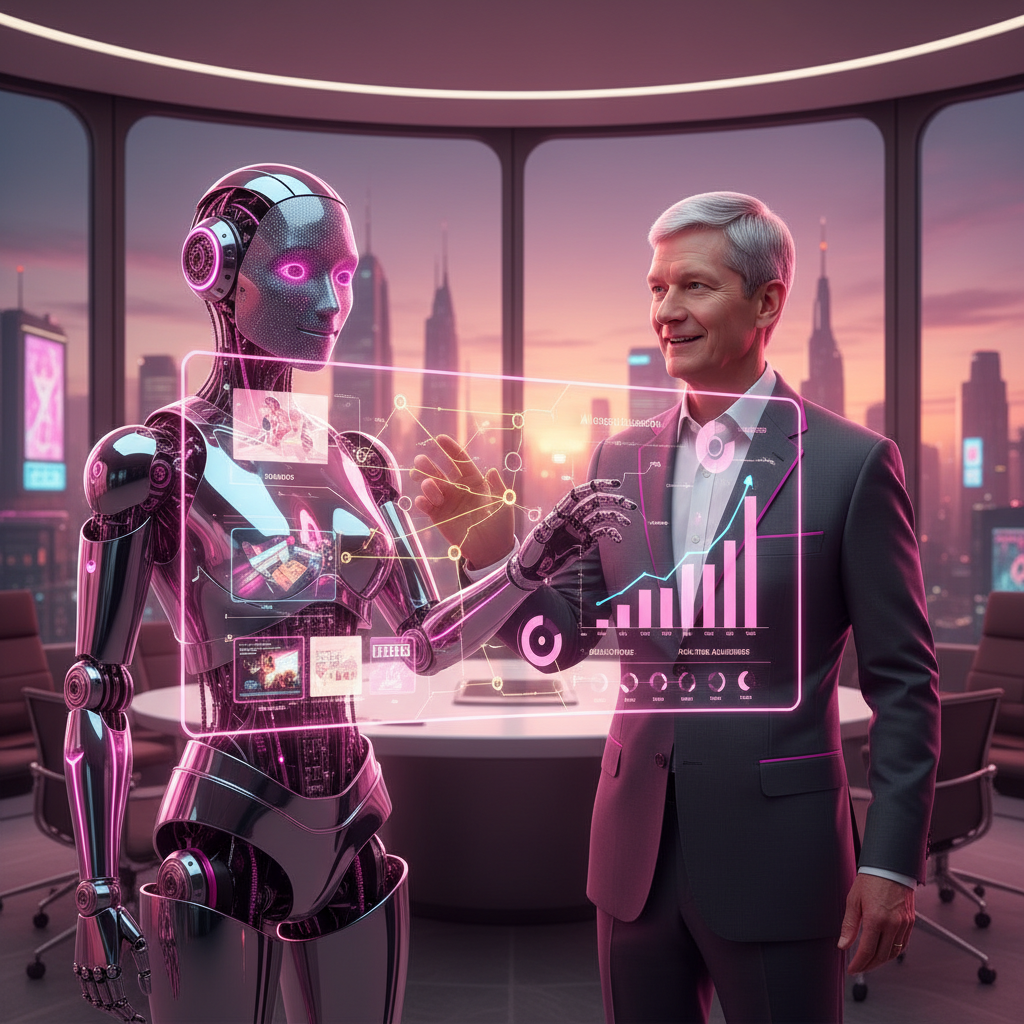
The Future of Advertising: Mastering AI Advertising Automation by 2026
The Dawn of Intelligent Advertising
The digital advertising landscape is shifting beneath our feet. Every day, the complexity of managing campaigns grows exponentially. Marketers face a tidal wave of data, fragmenting audiences, and platforms that change their algorithms on a whim.
Trying to keep up manually is no longer just difficult; it is becoming impossible. The sheer volume of real-time bidding fluctuations and the demand for hyper-personalization at scale has outpaced human capability.
Marketers are burning out, and budgets are bleeding due to inefficiencies. The old ways of spreadsheets and manual bid adjustments are crumbling under the weight of modern digital demands.
Enter ai advertising automation. This is not just a buzzword; it is the revolutionary solution that is redefining how businesses connect with their target audiences. It is the bridge between chaotic data and actionable, profitable strategy.
In this comprehensive guide, we will explore exactly what ai advertising automation entails and how it is reshaping the industry. We will dive deep into the mechanics of ai self optimizing ads, uncover the undeniable benefits of automated digital advertising with ai, and provide a roadmap for what you can expect from this technology by the year 2026.
Understanding AI Advertising Automation: A Paradigm Shift
To master the future, we must first define it. AI advertising automation is the deployment of artificial intelligence and machine learning algorithms to autonomously manage, optimize, and execute digital advertising campaigns.
This goes far beyond simple scheduling tools or basic rules-based automation. It involves a system that can think, learn, and adapt. It automates critical tasks that were traditionally performed by humans, such as precise audience targeting, complex bid management, dynamic budget allocation, and rigorous ad creative testing.
Core Components of the Technology
The power of automated digital advertising with ai lies in its three foundational pillars:
- Machine Learning (ML): At the heart of every effective automation system are ML algorithms. These algorithms allow the system to ingest vast datasets, identify intricate patterns invisible to the human eye, and make data-driven decisions without needing explicit, line-by-line programming.
- Data Analytics: AI advertising automation thrives on data. It processes and interprets massive streams of real-time information from diverse sources—ad platforms, Customer Relationship Management (CRM) systems, website analytics, and third-party data providers—to generate actionable insights instantly.
- Predictive Modeling: Perhaps the most exciting capability is the ability to look forward. By analyzing historical data alongside current market trends, AI can forecast future campaign performance. This helps marketers anticipate outcomes and pivot strategies before money is wasted.
Unlike traditional automation, which simply executes a pre-set command, ai advertising automation engages in intelligent decision-making. It continuously learns from its own actions, becoming smarter and more efficient with every impression served.
The Engine of Performance: How AI Self-Optimizing Ads Work
The true magic happens when the system begins to improve itself. AI self optimizing ads represent a leap forward in campaign management, where the ads themselves adapt to the environment to maximize success.
Real-time Performance Monitoring
An ai ad automation system never sleeps. It continuously tracks critical Key Performance Indicators (KPIs) such as:
- Click-Through Rates (CTR)
- Conversion Rates
- Cost Per Click (CPC)
- Cost Per Acquisition (CPA)
- Return on Ad Spend (ROAS)
- Engagement metrics across all active channels
This vigilance ensures that no trend is missed and no budget is wasted on underperforming assets.
Automated Decision-Making & Adjustments
The \”self-optimizing\” nature of automated digital advertising with ai manifests in several powerful ways:
Dynamic Bid Management
AI self optimizing ads systems automatically adjust bids in real-time. If a specific placement or time of day is driving high conversions, the AI increases the bid to capture more of that traffic. Conversely, it decreases bids for underperforming segments, ensuring your budget is always focused on high-ROI opportunities.
Targeting Refinement
Audience behavior is fluid. AI continuously analyzes demographics, interests, and psychographics to refine target segments. It identifies new, high-potential audiences you may have missed and excludes those who are unlikely to convert, ensuring your message reaches the most receptive users.
Budget Allocation Optimization
Imagine having a portfolio manager for your ads who works 24/7. AI intelligently shifts ad spend dynamically across different campaigns and channels. If Facebook is outperforming Google Ads on a Tuesday morning, the system can reallocate budget instantly to the winning channel to maximize impact.
Dynamic Creative Optimization (DCO)
This is where art meets science. AI analyzes which specific elements of an ad—headlines, images, videos, or calls-to-action—resonate best with specific audience segments. It can then automatically assemble personalized ad creatives on the fly for individual users, significantly boosting engagement and conversion rates.
A/B Testing at Scale
Humans can run a few A/B tests at a time. AI self optimizing ads can run hundreds or even thousands simultaneously. This rapid experimentation allows the system to quickly identify the perfect combination of copy, creative, and targeting.
Through a continuous learning loop, the system uses the data from every interaction to refine its models. This means your campaigns don’t just maintain performance; they progressively become more efficient and effective over time.
Comprehensive Benefits of Automated Digital Advertising with AI
Adopting automated digital advertising with ai is not just about keeping up; it is about gaining a significant competitive advantage. The benefits extend far beyond simple time savings.
Maximized Return on Investment (ROI)
Precision is profitable. By utilizing data-driven insights for targeting and bidding, ai ad automation drastically reduces wasted spend. This leads to lower customer acquisition costs and higher conversion rates, directly boosting your bottom line.
Unprecedented Efficiency & Time Savings
Marketing teams are often bogged down by repetitive tasks. AI automates the manual grunt work—bid adjustments, report generation, and routine testing. This frees up your human talent to focus on what they do best: high-level strategy, creative storytelling, and building genuine customer relationships.
Enhanced Personalization at Scale
Today’s consumer expects personalization. AI self optimizing ads make it possible to deliver highly relevant ad experiences to millions of individuals simultaneously. By tailoring the message to the user’s real-time behavior and preferences, you increase engagement and foster deeper brand loyalty.
Superior Agility & Responsiveness
Markets shift in the blink of an eye. Competitors launch new offers, and news cycles change consumer sentiment instantly. Automated digital advertising with ai allows your campaigns to react immediately to these changes, adapting much faster than any manual process ever could.
Reduced Human Error & Bias
Humans are prone to fatigue and unconscious bias. We might stick with a losing strategy because of \”gut feeling\” or make a calculation error in a spreadsheet. AI minimizes these risks, making decisions based purely on objective data and performance metrics.
Scalability for Growth
As your business grows, your advertising complexity increases. Automated digital advertising with ai enables you to manage and scale numerous complex campaigns across global platforms without needing to proportionally double or triple your marketing headcount.
The Road Ahead: AI Advertising Automation by 2026 and Beyond
The pace of innovation is accelerating. Looking toward 2026, the capabilities of ai advertising automation will evolve from \”helpful tools\” to \”autonomous engines\” of growth.
Hyper-Personalized Customer Journeys
By 2026, we predict that ai advertising automation will enable seamless, hyper-personalized customer journeys. The technology will adapt in real-time across every touchpoint, from the initial ad exposure to the website visit, and through to post-purchase engagement, creating a unified and unique experience for every single user.
More Autonomous Campaign Management
We are moving towards a world of \”driverless\” advertising. AI self optimizing ads will likely evolve to manage entire campaign lifecycles. From ideation—using AI to generate the creative assets themselves—to execution and final optimization, the process will require minimal human intervention.
Advanced Predictive Analytics for Strategy
Future AI won’t just react; it will predict. AI advertising automation will move beyond optimizing current campaigns to forecasting future market trends and consumer demand shifts. Marketers will be able to formulate strategies based on accurate predictions of what will happen next month or next year.
Integration with Emerging Technologies
Automated digital advertising with ai will deeply integrate with new frontiers. We expect to see seamless coordination with Augmented Reality (AR) and Virtual Reality (VR) advertising environments, voice search optimization, and interactive Digital Out-of-Home (DOOH) experiences.
Ethical AI and Transparency
As the technology matures, so too will the governance surrounding it. By 2026, we anticipate stricter regulations and a strong industry push for \”explainable AI.\” Advertisers will need to ensure their ai advertising automation tools operate transparently and ethically, respecting user privacy and data rights.
The Evolving Role of the Human Marketer
Will robots replace us? No. But our roles will change. Human marketers will shift from being \”operators\” to being \”conductors.\” The focus will be on strategic oversight, creative direction, ethical governance, and interpreting the deep insights generated by AI to drive broader business goals.
According to recent industry analysis, the adoption of AI in advertising is expected to grow significantly. For instance, reports suggest that the global market for AI in marketing is projected to reach over $107 billion by 2028, indicating a massive shift towards automation in the coming years (Statista).
Conclusion: Embracing the Intelligent Future of Advertising
The era of manual advertising management is drawing to a close. AI advertising automation represents a fundamental shift in how businesses grow and compete in the digital age. It offers the promise of higher efficiency, better ROI, and more meaningful connections with customers.
This is not a distant future; the transition is happening now. Those who embrace ai advertising automation today will be the market leaders of tomorrow. By 2026, the gap between AI-driven businesses and traditional ones will likely be insurmountable.
Don’t let your business get left behind in the manual era. It is time to harness the full potential of intelligent advertising.
Ready to future-proof your marketing strategy?
At BoosterDigital, we specialize in helping businesses integrate world-class automation and digital marketing strategies. Contact us today to discover how we can help you unlock the power of AI for your campaigns.
Contact BoosterDigital Now/html
<p style=”background:#e8f4fd;padding:12px 16px;border-radius:6px;border-left:3px solid #1a73e8;margin-top:24px;”><strong>📖 Related:</strong> <a href=”https://booster-digital.com/blog/boost-your-business-with-ai-search-optimization/”>AI Search Optimization: Boost Your Business in 2026</a></p>