
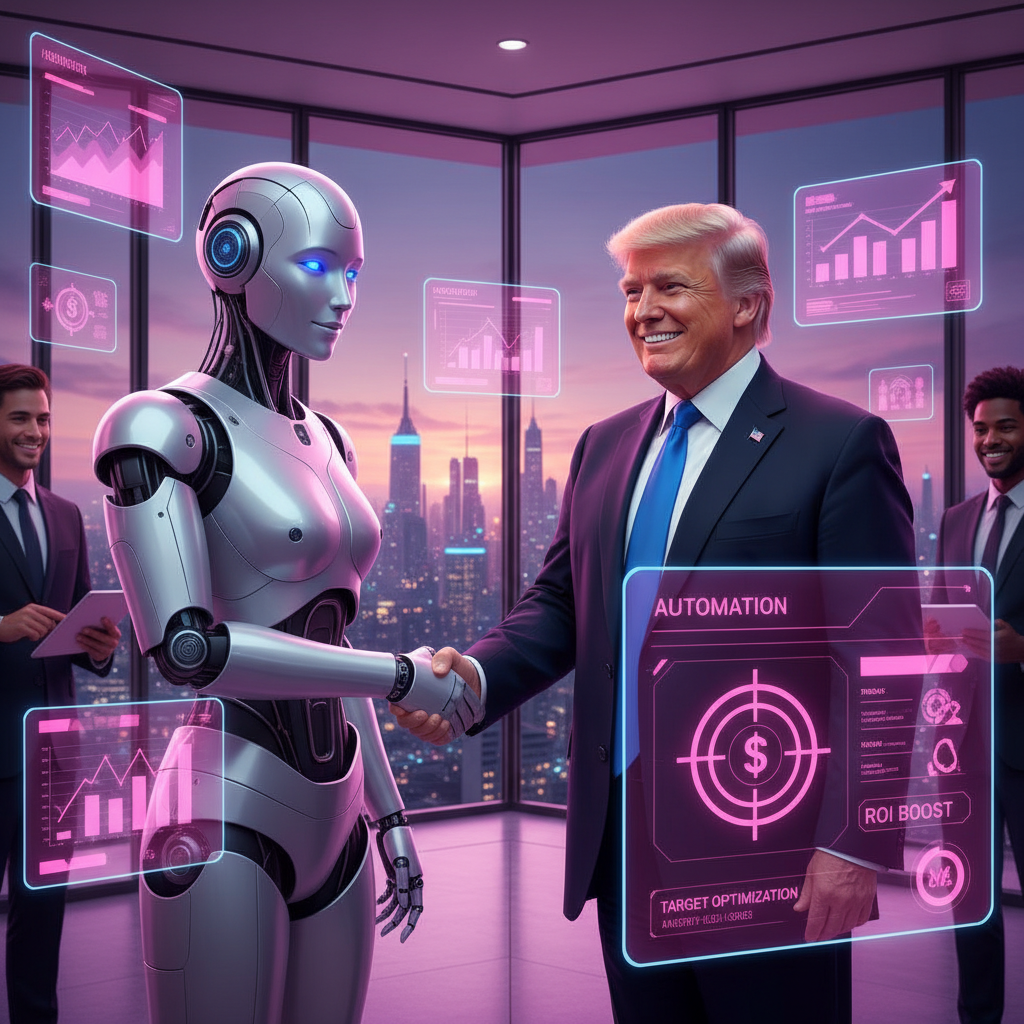
Unlocking Growth: Essential AI Marketing Automation Strategies for the Modern Marketer
The marketing landscape is undergoing a seismic shift. We have moved past the era where Artificial Intelligence (AI) was merely a buzzword thrown around in boardrooms. Today, it is the engine driving the most successful brands in the world. It is the difference between shouting into a void and whispering directly into the ear of your ideal customer.
For modern businesses, understanding and implementing ai marketing automation strategies is no longer a luxury; it is a fundamental requirement for survival and growth. But what does this actually mean for your day-to-day operations?
AI Marketing Automation is the application of advanced AI technologies to automate, optimize, and personalize marketing tasks. It goes beyond simple scheduling tools. It involves intelligent systems that learn from data, predict outcomes, and execute campaigns with a level of precision that human teams simply cannot match manually. It frees your team from repetitive manual efforts, allowing them to focus on creativity and strategy.
The strategic imperative is clear: adopt AI or risk falling behind. The efficiency gains and Return on Investment (ROI) potential are too significant to ignore. The industry is waking up to this reality at lightning speed.
In fact, the ‘AI in marketing’ market is expected to grow at a Compound Annual Growth Rate (CAGR) of 26.7% by 2034. This signals a massive industry shift where automation will become the standard operating procedure for competitive businesses. Digital Marketing Institute
In this comprehensive guide, we will unpack everything you need to know. We will explore how modern AI tools can automate your campaigns, optimize your targeting to pinpoint accuracy, and significantly boost your ROI. Whether you are looking to refine your current stack or build a new strategy from scratch, these insights will serve as your blueprint for success.
AI as Your Marketing Copilot: Core AI Marketing Automation Strategies
One of the biggest misconceptions about AI is that it is here to replace marketers. This could not be further from the truth. The most effective ai marketing automation strategies view AI as a \”copilot\”—an intelligent assistant that handles the heavy lifting, data crunching, and repetitive execution.
Empowering Marketers to Do More
Imagine having a team member who never sleeps, never makes a typo, and can analyze millions of data points in seconds. That is your AI copilot. By handling time-consuming tasks, AI empowers human marketers to focus on the \”art\” of marketing—storytelling, brand strategy, and creative direction.
AI assists in building complex marketing flows that would be impossible to manage manually. It can rigorously test variations of your content through A/B testing and multivariate testing at a scale previously unimaginable. Instead of guessing which headline works best, AI analyzes campaign performance in real-time and suggests data-driven improvements to maximize engagement.
This level of support is transforming the industry. Klaviyo notes that these trends are reshaping how teams operate, allowing for faster iteration and better results.
Personalization at Scale
The holy grail of modern marketing is personalization. Customers today expect brands to know them, understand their needs, and provide relevant solutions. ai marketing automation strategies make this possible at scale.
By analyzing vast datasets—including browsing history, past purchases, and demographic data—AI can tailor content, offers, and messaging for every single individual. This ensures that your customer receives the right message, on the right channel, at the exact moment they are most likely to convert.
- Relevance: No more generic email blasts.
- Timing: Messages arrive when the user is active.
- Content: Product recommendations match unique tastes.
The impact is undeniable. 92% of marketers report that AI has already impacted their role, and one in five is planning to use AI agents to further automate their strategies. Coursera
Real-World Examples of Automation
To visualize how this works, consider these common applications:
- Automated Email Workflows: AI powers sophisticated sequences such as welcome series for new subscribers, abandoned cart reminders that nudge hesitant buyers, and re-engagement campaigns for dormant contacts.
- Intelligent Lead Scoring: Instead of treating all leads equally, AI identifies and prioritizes high-value leads based on their behavior and demographics. This allows your sales team to focus their energy on prospects most likely to buy.
- Cross-Channel Nurtures: AI ensures your messaging is consistent whether a customer is looking at an email, scrolling social media, or receiving an in-app notification.
The Future is Now: AI Campaign Automation 2026
As we look toward the horizon, the capabilities of AI are accelerating. We are rapidly approaching the era of ai campaign automation 2026, where the technology moves from supportive to autonomous.
Evolution to Autonomous Orchestration
Current automation often relies on \”if this, then that\” logic set up by humans. The future lies in self-optimizing systems. ai campaign automation 2026 will see platforms that continuously plan, execute, and adjust campaigns in real-time without constant human intervention.
These systems will monitor performance goals and automatically shift budgets, change creative assets, and retarget audiences to ensure those goals are met. It is the shift from manual transmission to a self-driving car. Klaviyo
Real-Time Adaptation and 1:1 Communication
The speed of marketing is increasing. Future AI systems will use predictive models built on first-party data to anticipate customer needs before the customer even articulates them. They will analyze real-time behavior to dynamically adapt the creative assets a user sees.
Furthermore, we are moving toward true one-to-one communication. AI will be able to generate and evolve messaging based on your specific brand tone and the customer’s immediate context. Every touchpoint will feel like a live, handcrafted conversation between two people, rather than a broadcast from a brand.
This level of personalization is critical. Robotic Marketer highlights that this contextual adaptation is central to future marketing trends.
The data supports this trajectory. It is predicted that by 2026, 80% of marketing automation will be powered by AI. This underscores the rapid shift towards these advanced capabilities. KeoMarketing
Operational Changes: Pods and Privacy
To leverage ai marketing automation strategies effectively in the future, operational models must change.
- Pod-Based Execution: We are seeing the rise of cross-functional \”pod\” teams. These small, agile groups integrate strategy, creative, analytics, and technical execution to act quickly on AI insights. The Gutenberg
- Privacy as a Competitive Advantage: With stricter regulations and the death of third-party cookies, privacy is paramount. Brands that leverage owned (first-party and zero-party) data to drive their AI will gain a massive competitive edge. Trust will become a currency. Klaviyo
Unlocking Foresight: Harnessing Predictive Automation Marketing for Enhanced ROI
One of the most powerful aspects of modern AI is the ability to look forward, not just backward. This is the realm of predictive automation marketing.
Defining Predictive Automation Marketing
Predictive automation marketing is the use of AI and machine learning to analyze historical and real-time data to forecast future outcomes. It shifts your marketing stance from reactive (responding to what happened) to proactive (preparing for what will happen).
By analyzing patterns, AI can predict future customer behavior, preferences, and market trends with frightening accuracy.
Anticipating Customer Needs
Imagine knowing a customer is going to buy a product before they do. Predictive models identify customer intent signals that humans might miss. They can predict which specific products or services a customer is likely to be interested in next, allowing you to present that offer at the perfect time.
Equally important is anticipating potential churn. AI can flag customers who are exhibiting behaviors associated with leaving your brand, allowing you to intervene early.
The Impact on ROI
Implementing predictive automation marketing directly correlates to a healthier bottom line through several mechanisms:
- Optimized Targeting: AI enables hyper-segmentation based on predicted behaviors. You stop wasting money on audiences who won’t convert and double down on those who will.
- Churn Reduction: By proactively engaging at-risk customers with targeted retention strategies, you save the cost of acquiring new customers to replace them.
- Increased Customer Lifetime Value (CLTV): AI identifies the perfect opportunities for upselling and cross-selling, optimizing the customer journey to extract maximum value over time.
Pre-Campaign Modeling
A game-changing feature of advanced ai marketing automation strategies is pre-campaign modeling. AI now allows marketers to model outcomes before campaigns even launch. You can simulate how a specific message might perform with a specific audience.
This enables better decisions on channels, audiences, and content, helping you identify risks or diminishing returns early without spending a cent of your budget. The Gutenberg
Practical Applications
You can start using this today through:
- AI-Powered Lead Scoring: Predicting the exact likelihood of a lead converting.
- Dynamic Pricing: AI recommending pricing strategies based on demand.
- Predictive Content: Automatically showing the blog posts or products a user is most likely to click on.
Powering Your Campaigns: Essential AI Optimization Tools
To execute these strategies, you need the right technology stack. There is a vast array of ai optimization tools available that are integral to modern ai marketing automation strategies.
AI-Powered Content Generation & Optimization
Content is the fuel for your marketing engine. AI tools assist in generating high-quality blog post outlines, compelling email copy, ad creatives, and social media posts. Beyond creation, they optimize this content for SEO and readability, ensuring it ranks well and reads well.
It is important to note that generative AI is evolving. It is moving from purely speed-focused output to providing strategic substance that resonates deeply with audiences. Sparknovus
Paid Media Automation
Managing ad spend manually is inefficient. Platforms like Meta Advantage Plus and Google Performance Max are prime examples of ai campaign automation 2026 in action today. They use AI to automate targeting, rotate creatives, adjust bids, and allocate budgets across channels to maximize performance. Sparknovus
CRM and Analytics
Your Customer Relationship Management (CRM) system is the heart of your data. Modern CRMs integrate AI for advanced lead scoring and segmentation. When paired with AI-driven analytics tools, you get dashboards that provide real-time insights.
These tools identify performance gaps and suggest optimizations based on predictive automation marketing models, making analytics a key trend for the coming years. Coursera
Chatbots and Conversational AI
Customer service is a marketing channel. AI-powered chatbots provide instant support, qualify leads, and guide users through the sales funnel 24/7, ensuring you never miss an opportunity due to office hours.
Integration is Key
The most important takeaway regarding ai optimization tools is integration. These tools cannot operate in silos. To succeed, they must integrate to create a cohesive, data-driven marketing ecosystem where insights from one tool inform the actions of another.
Implementing and Measuring Success: Strategies for Sustainable Growth
Adopting ai marketing automation strategies is a journey. To ensure sustainable growth, you need a clear implementation plan.
Strategic Implementation
Start Small, Scale Up: Do not try to automate everything overnight. Begin with specific, well-defined strategies—like an abandoned cart flow or a lead scoring model—to achieve quick wins. This builds internal confidence and proves ROI.
Data Quality is Paramount: AI is only as good as the data it is fed. Prioritize collecting clean, organized, and relevant first-party data. This is the fuel for effective AI.
Human Oversight and Training: Marketers must understand the capabilities and limitations of AI. Continuous training is required to manage these tools and interpret their outputs correctly.
Brand Alignment: You must ensure your AI is trained on your specific brand tone, voice, and guidelines. Consistency is key to building trust. Klaviyo
Measuring ROI and Impact
To justify the investment, you must track the right Key Performance Indicators (KPIs):
- Conversion Rates: Monitor improvements in visitors becoming leads, and leads becoming customers.
- Customer Lifetime Value (CLTV): Look for increases due to better personalization.
- Customer Acquisition Cost (CAC): accurate targeting should lower this number.
- Time Savings: Measure the hours saved by your team through automation.
- Engagement: Track email open rates and click-through rates.
Attribution Modeling: AI can also assist in multi-touch attribution, helping you understand the true impact of various marketing efforts across the entire funnel, rather than just the last click.
Addressing Challenges
Be prepared for hurdles. Data privacy concerns are real, and you must remain compliant. AI models need continuous refinement to stay accurate. Integrating disparate systems can be technical. However, the benefits far outweigh these challenges.
Conclusion: Embracing the Intelligent Marketing Revolution
The dawn of intelligent marketing is here. Throughout this post, we have explored the immense power of ai marketing automation strategies to transform your business. From the efficiency of an AI copilot to the foresight of predictive automation marketing, these tools offer a path to increased efficiency, deeper personalization, and significantly boosted ROI.
The trends for ai campaign automation 2026 show that this is not a passing fad. It is the future infrastructure of our industry. Automation and ai optimization tools will soon be the standard by which all marketing teams are measured.
Do not view AI as a threat. View it as an unparalleled opportunity. It is a chance to elevate your strategic impact, deliver exceptional customer experiences, and grow your business faster than ever before.
Ready to future-proof your marketing?
At BoosterDigital, we specialize in helping businesses implement world-class digital marketing and automation strategies. Let us help you navigate the AI revolution and unlock your full growth potential.
Contact BoosterDigital today to start your automation journey.