
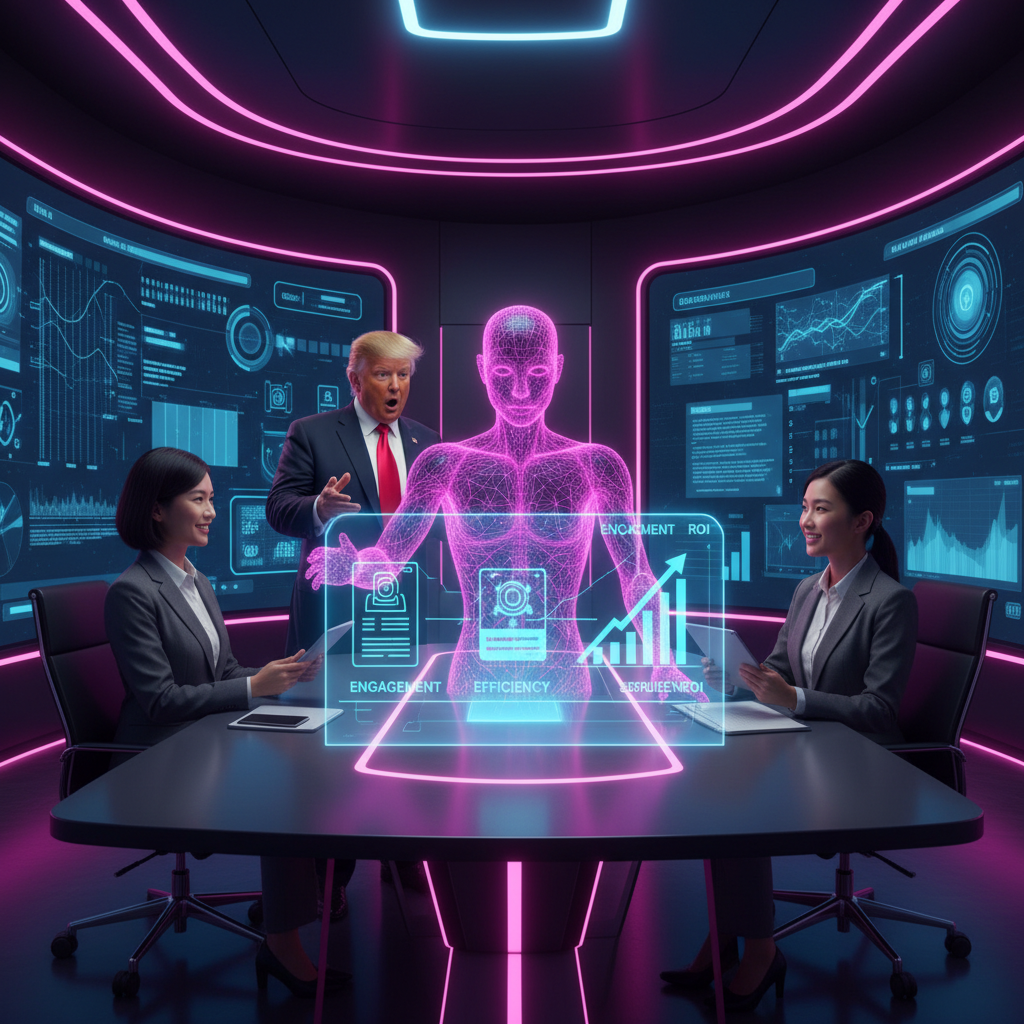
Revolutionize Your Events: The Power of AI Event Marketing Automation
Planning an event often feels like juggling flaming torches while riding a unicycle. You have to manage guest lists, send countless emails, track registrations, and ensure everyone stays engaged. It is exhausting. It is manual. And frankly, it is prone to human error.
The traditional methods of event management are no longer enough to keep up with the demands of modern attendees. They expect instant answers, personalized recommendations, and seamless experiences. If you are still relying on spreadsheets and manual email blasts, you are falling behind.
This is where ai event marketing automation steps in to save the day.
By leveraging artificial intelligence, you can transform the way you plan, promote, and execute events. It is not just about saving time; it is about creating a smarter, more efficient strategy that drives results.
In this guide, we will explore how you can automate event campaigns with ai to eliminate manual grunt work and supercharge your attendee engagement. We will cover everything from intelligent promotion to predictive follow-ups, ensuring you have the tools to succeed.
The impact of this technology is real. For instance, Eventico achieved a massive 20% increase in attendee satisfaction scores and a 30% reduction in event management costs just by harnessing the capabilities of AI. You can read more about their success here.
Let’s dive into how you can achieve similar results and leverage ai event marketing to take your business to the next level.
What is AI Event Marketing Automation and Why is it Essential?
Before we jump into the strategies, we need to define exactly what we are dealing with. AI event marketing automation is the application of artificial intelligence technologies—such as machine learning, natural language processing (NLP), and predictive analytics—to automate, optimize, and personalize event-related tasks.
In simple terms, it is like having a super-powered digital assistant that never sleeps. It handles the repetitive data work so you can focus on the creative and strategic parts of your event.
Why You Need to Automate Event Campaigns with AI
The event landscape has changed. Attendees are flooded with invitations and content. To stand out, you need to be faster, smarter, and more relevant. Here is why incorporating ai event marketing is essential for modern professionals:
- Increased Efficiency: Manual tasks eat up hours of your day. AI automates data entry, scheduling, and basic communication. This frees up your human resources to focus on high-value activities like networking and content creation.
- Hyper-Personalization: Generic \”Dear Attendee\” emails end up in the trash. AI analyzes user data to deliver tailored experiences. It ensures the right message reaches the right person at the exact right time.
- Data-Driven Decision Making: Gut feelings are good, but data is better. AI provides deep insights into what is working and what is not. This allows you to make informed strategic choices rather than guessing.
- Improved ROI: By optimizing your ad spend and resource allocation, AI ensures you get the most out of your budget. You stop wasting money on ineffective channels and start investing in what drives conversions.
- Enhanced Attendee Experience: From seamless check-ins to instant answers via chatbots, AI creates a frictionless journey for your guests. A happy attendee is a returning attendee.
Research supports this shift. AI helps event marketers explore new ways to automate routine tasks, inform complex event planning, adapt insights in real-time, and create unique attendee experiences that manual methods simply cannot match. Learn more about these benefits here.
Supercharging Your Outreach: AI Event Promotion Automation
The first hurdle in any event is getting people to sign up. Traditional promotion often involves \”spray and pray\” tactics—blasting messages to everyone and hoping someone bites. AI event promotion automation changes the game by introducing precision and intelligence to your outreach.
Intelligent Audience Targeting and Segmentation
One of the most powerful features of ai event marketing is its ability to understand your audience better than you do. AI algorithms sift through mountains of historical data, demographic information, and online behavior patterns.
Instead of manually sorting lists, the AI identifies your \”ideal attendee\” profile. It looks at who attended your past events, who engaged with your content, and who matches specific criteria. It then segments your audience into highly specific groups.
This allows for hyper-targeted advertising. You can serve different ads to C-level executives versus entry-level managers, ensuring the value proposition resonates with each specific group. This leads to higher click-through rates and lower acquisition costs.
According to industry insights, AI can analyze which parts of your event were most engaging for each individual attendee to craft personalized outreach that truly converts. See the research here.
Dynamic Content Generation and Optimization
Writing hundreds of variations of ad copy is tedious. AI tools can now assist in drafting compelling marketing copy for emails, social media posts, and ad creatives in seconds.
But it goes beyond just writing. AI uses Generative AI to optimize your content. It can test thousands of headline variations to see which one performs best. It can tweak the Call-to-Action (CTA) button color, text, or placement based on predicted performance.
If the AI detects that a specific segment responds better to \”Early Bird Discount\” than \”Save 20%,\” it will automatically adjust the copy for that group. This level of granular optimization is impossible to achieve manually.
Multi-Channel Distribution and Scheduling
Your audience is everywhere—LinkedIn, Twitter, Email, Instagram. Knowing where to find them and when to message them is a science. AI event promotion automation handles this complexity with ease.
AI analyzes engagement patterns to determine the optimal channels for distribution. If your target audience is most active on LinkedIn on Tuesday mornings, the AI will schedule your posts for that exact window.
It orchestrates a multi-channel campaign where your email marketing supports your social media ads, creating a cohesive brand presence. Furthermore, advanced tools like Zenus.ai can provide real-time sentiment analysis from facial expressions to adapt marketing strategies on-site, ensuring your promotion remains relevant even during the event. Read more about this technology here.
Streamlining the Journey: AI Event Registration
You have convinced them to click. Now, you need them to register. A clunky, long registration process is the number one killer of conversions. AI event registration tools are designed to remove friction and make signing up a breeze.
AI-Powered Chatbots and Virtual Assistants
Imagine having a registration desk that is open 24/7. AI-powered chatbots and virtual assistants live on your registration page, ready to help.
These bots can handle common FAQs instantly. Questions like \”Is there parking?\”, \”What is the cancellation policy?\”, or \”Is lunch included?\” are answered in milliseconds. This prevents potential attendees from leaving the page to search for answers (and never coming back).
Beyond answering questions, these bots guide users through the registration form. If a user gets stuck or pauses for too long, the bot can pop up and offer assistance, significantly reducing drop-off rates.
The scale of this technology is impressive. At the 2025 Maha Kumbh Mela, chatbots successfully navigated millions of attendees and provided personalized suggestions. You can read about this massive deployment here. Similarly, Eventico Technologies reduced check-in times by 70% using AI, proving that speed matters. Check out that statistic here.
Smart Registration Forms and Data Pre-population
No one likes filling out long forms. AI enables \”smart forms\” that adapt based on the user. If a user selects \”Virtual Attendee,\” the form automatically hides questions related to dietary restrictions or hotel bookings.
Even better, AI can pre-populate fields using existing data. If the attendee has joined your events before, or if their data is available via a LinkedIn integration, the form fills itself out. The user just has to click \”Confirm.\”
This seamless experience drastically improves conversion rates. By removing the manual effort, you encourage more people to cross the finish line and secure their ticket.
Personalized Ticket Recommendations and Upselling
AI event marketing does not just process orders; it increases order value. Intelligent algorithms analyze the attendee’s profile, job title, and past behavior to suggest the most suitable ticket tier.
If a user is a senior executive, the AI might recommend the \”VIP Pass\” with exclusive networking access. If they are a developer, it might suggest adding a specific technical workshop.
This personalized upselling feels like a helpful suggestion rather than a sales pitch, leading to higher revenue per attendee without being intrusive.
Sustaining Engagement: AI Event Follow-Up Strategies
The event is over, but your work is not. The post-event phase is critical for retaining long-term value. Unfortunately, it is often the most neglected part of the lifecycle. AI event follow-up ensures you maintain the momentum you worked so hard to build.
Personalized Post-Event Communication
Sending a generic \”Thank You for Coming\” email to everyone is a wasted opportunity. AI event marketing allows you to craft highly tailored follow-ups.
The AI tracks what sessions an attendee visited, which booths they stopped at, and what questions they asked. It then generates a personalized email that references these specific interactions.
For example, the email might say: \”We hope you enjoyed the session on ‘Future Tech’. Here is a link to the speaker’s slides and a related whitepaper you might like.\” This level of relevance keeps the conversation going.
Research shows that AI can craft emails that meet attendees exactly where they are, based on which parts of your event were most engaging for each individual. See how this works here.
Automated Lead Nurturing and Sales Follow-Up
Not every attendee is ready to buy immediately. You need to nurture them. AI helps you segment attendees into different lead categories—Hot, Warm, or Cold—based on their engagement score.
Once segmented, the AI triggers automated drip campaigns. These are sequences of emails designed to move the lead down the funnel. A \”Hot\” lead might get a direct calendar link for a sales demo, while a \”Warm\” lead receives educational case studies.
This ensures that no lead falls through the cracks. Your sales team receives alerts only for the most qualified prospects, allowing them to focus their energy where it counts.
Feedback Analysis and Sentiment Monitoring
Gathering feedback is easy; analyzing it is hard. If you have thousands of survey responses, reading them all is impossible. AI uses Sentiment Analysis to process this data instantly.
It scans through open-ended text responses to identify key trends, pain points, and areas for improvement. It can tell you if the general sentiment regarding the food was negative, or if the keynote speaker was a hit.
This real-time insight is invaluable for planning future events. AI can analyze participant sentiment to gain deep insights into event success and areas for improvement. Read more on sentiment analysis here.
Putting It All Together: How to Automate Event Campaigns with AI
We have looked at the individual pieces. Now, let’s look at the whole puzzle. To truly automate event campaigns with ai, you need an integrated ecosystem where data flows freely between stages.
Integrated AI Workflows
Efficiency comes from integration. Your ai event promotion automation tools should talk to your registration platform, which should talk to your CRM.
Imagine this workflow: An AI ad tool identifies a prospect on LinkedIn. They click a link and land on a smart registration form that pre-fills their data. Upon registering, a chatbot welcomes them and suggests a hotel. Post-event, the AI analyzes their session attendance and automatically triggers a nurture email sequence tailored to their interests.
This is a seamless, touchless workflow. It eliminates data silos and ensures a consistent experience for the user.
Predictive Analytics for Real-time Optimization
The true power of AI lies in prediction. Predictive analytics allows you to see the future of your campaign. It continuously analyzes performance data to forecast outcomes.
If the AI predicts that you will miss your registration target by 10%, it can recommend real-time adjustments. It might suggest increasing ad spend on a specific high-performing channel or sending a discount code to a specific segment of \”on-the-fence\” prospects.
Predictive analytics and customer segmentation are prime examples of AI in marketing automation. For instance, ConferLink achieved a 50% networking boost and a 35% satisfaction gain using these AI strategies. See the full case study here and learn about predictive models here.
Choosing the Right AI Tools and Platforms
To pull this off, you need the right tech stack. You cannot rely on disjointed tools. You need comprehensive event management software with integrated AI capabilities.
Platforms like Glue Up offer all-in-one AI for communication, personalization, and data decisions. They act as a central command center for your event. Learn more about their capabilities here.
Similarly, Kaltura offers AI for virtual event chatbots, matchmaking, and post-event emails based on engagement. These platforms are designed to handle the heavy lifting so you don’t have to. Check out Kaltura’s features here.
The Future of Events is Automated and Intelligent
The era of manual event planning is fading. The future belongs to those who embrace ai event marketing automation.
By integrating AI into your strategy, you are not just automating tasks; you are elevating the entire human experience. You are creating events that are more personal, more engaging, and significantly more profitable.
You can reduce event planning costs by up to 30% through automation in scheduling, budgeting, and resource allocation. That is a game-changing margin. Read the report here.
Do not let your competitors leave you behind. It is time to stop working harder and start working smarter.
Ready to transform your event strategy? At BoosterDigital, we specialize in building world-class automation frameworks that drive growth. We can help you implement the AI tools mentioned in this guide to ensure your next event is your best one yet.