
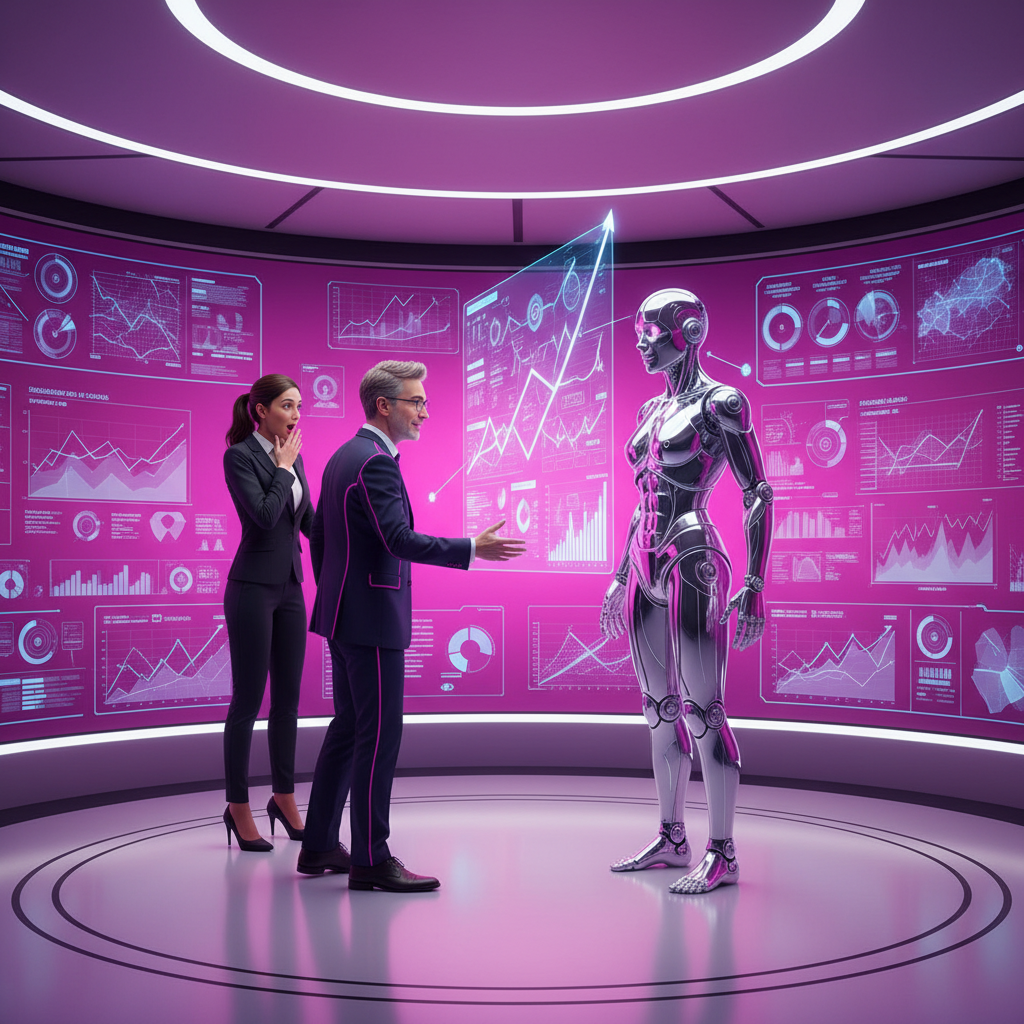
Unlocking the Future of Marketing: A Deep Dive into AI Predictive Marketing
The digital marketing landscape is shifting beneath our feet. In the past, successful marketing was often about reacting quickly to trends or analyzing what happened last quarter to fix mistakes. However, in today’s hyper-competitive environment, looking in the rearview mirror is no longer enough to stay ahead. To truly thrive, businesses need to anticipate the road ahead.
This is where ai predictive marketing enters the conversation. It represents a seismic shift from reactive strategies to proactive foresight. Imagine knowing what your customer wants before they even realize it themselves, or understanding exactly which campaign creative will generate the highest ROI before you spend a single dollar. This is not science fiction; it is the reality of modern data science.
By leveraging the power of ai predictive marketing, brands can transform uncertainty into calculated action. This comprehensive guide will take you through the mechanisms of this technology, exploring how predictive analytics for marketing is redefining success. We will investigate how AI predicts customer behavior, optimizes campaign outcomes, and forecasts broader market trends to give your business an unassailable competitive edge.
What is AI Predictive Marketing? Demystifying the Core Concept
At its heart, ai predictive marketing is the strategic application of artificial intelligence and machine learning models to vast amounts of data. Its goal is simple yet profound: to forecast future outcomes based on historical patterns and real-time inputs. Unlike traditional marketing analytics, which tells you what happened, predictive AI tells you what is likely to happen next.
Defining the Technology
AI predictive marketing utilizes sophisticated algorithms to analyze historical and real-time customer data. By processing information such as past purchases, browsing habits, and engagement metrics, these models can identify subtle correlations that human analysts might miss. This enables the automatic adaptation of targeting, messaging, timing, and ad spend to maximize revenue and Return on Investment (ROI).
The \”Predictive\” Difference
The true power lies in the \”predictive\” aspect. Traditional analytics is descriptive; it creates a report card of past performance. Predictive marketing is prescriptive and forward-looking. It moves beyond \”How many people clicked this email?\” to \”Who is most likely to click this email if we send it on Tuesday at 10 AM?\” This shift allows marketers to intervene and influence the future rather than just observing it.
The Connection to Predictive Analytics for Marketing
It is impossible to discuss this topic without understanding predictive analytics for marketing. This discipline forms the fundamental backbone of AI marketing. It involves the use of statistical algorithms and machine learning techniques to identify the likelihood of future outcomes based on historical data. When you combine these analytics with the speed and scale of AI, you get a system that learns and improves over time.
For a deeper understanding of how these technologies work together, you can read more about how AI-driven predictive analytics enhances ad targeting, optimizes budgets, and forecasts consumer behaviour for smarter advertising decisions.
AI for Customer Behavior Prediction: Anticipating Every Move
One of the most valuable applications of this technology is ai for customer behavior prediction. Understanding your customer is the golden rule of marketing, but AI takes this to a granular, individual level that was previously impossible.
How AI Predicts Behavior
AI for customer behavior prediction involves analyzing massive datasets to build a profile of future intent. The AI looks at data points such as:
- Browsing History: Which pages did they visit, and for how long?
- Purchase Patterns: Do they buy on weekends? Do they wait for discounts?
- Demographics: Age, location, and job title.
- Engagement: Email opens, social media likes, and webinar attendance.
By synthesizing this data, the system identifies patterns and predicts individual actions. This allows businesses to understand what a specific customer is likely to buy next, the precise moment they are ready to purchase, or if they are showing signs of dissatisfaction.
Key Use Cases in Behavior Prediction
1. Predictive Audience Targeting & Segmentation
Traditional segmentation often groups people by broad categories like \”Women over 30.\” AI goes deeper. It clusters customers based on nuanced behaviors and predicted value. This enables marketers to target specific micro-segments with highly tailored offers. For instance, you can identify a segment of \”high-value impulse buyers\” and target them with exclusive, time-sensitive offers.
2. Lead Scoring & Pipeline Prioritization
Sales teams often waste valuable time chasing leads that will never convert. Predictive analytics for marketing solves this through advanced lead scoring. AI analyzes a lead’s interactions and compares them to the profiles of successful past customers. It then assigns a score representing the propensity to buy. This ensures that sales and marketing teams focus their energy on the highest-value prospects most likely to convert.
3. Next-Best-Offer and Recommendation Engines
Have you ever wondered how streaming services know exactly what movie you want to watch next? That is a recommendation engine at work. In marketing, AI suggests products and content based on a user’s unique history. This facilitates personalized homepages, intelligent upsells, and relevant cross-sell opportunities that feel helpful rather than intrusive.
4. Churn Prediction & Retention
Acquiring a new customer is significantly more expensive than retaining an existing one. AI is excellent at identifying \”churn risk.\” It spots the subtle warning signs—such as a decrease in login frequency or a change in support ticket tone—that indicate a customer is considering leaving. The system can then trigger automated \”save-a-customer\” offers or alert a human agent to reach out.
To see how major companies are leveraging this, look at how companies use predictive AI to tailor marketing campaigns to certain buyer personas to deepen customer engagement.
Furthermore, the impact is widespread. As noted by industry experts, predictive AI’s ability to turn data into foresight is changing a wide range of industries and business functions.
AI Campaign Prediction: Optimizing Performance Before Launch
Marketing has traditionally involved a lot of trial and error. You launch a campaign, wait for the data, and then optimize. AI campaign prediction flips this script by allowing you to optimize before you launch.
Defining AI Campaign Prediction
AI campaign prediction focuses on forecasting the likely success and impact of marketing initiatives while they are still in the planning phase. By simulating how a campaign will perform, marketers can make data-driven decisions to refine strategies, adjust creatives, and maximize ROI without burning through the budget first.
How It Works
The AI analyzes historical campaign data alongside current market trends, audience demographics, and even the visual elements of your creative assets. It then predicts key performance metrics, including:
- Engagement Rates: The predicted number of clicks, shares, and opens.
- Conversion Rates: The likelihood of the audience completing a purchase or sign-up.
- Overall ROI: The estimated financial return for every dollar spent.
The Benefits of Pre-Launch Optimization
The primary benefit here is efficiency. AI campaign prediction helps identify the most effective channels for a specific message. It allows for \”virtual A/B testing,\” where the AI predicts which headline or image will perform better, saving you the cost of running live tests. This leads to smarter resource allocation and message targeting that resonates deeply with the intended audience.
Research supports this shift in strategy, showing that AI can predict future customer actions, campaign performance, and market trends.
Furthermore, integrating these tools ensures long-term stability. As highlighted by Mailchimp, AI predictive analytics can help you make predictions about the future, ensuring better business decisions.
AI Marketing Forecasting: Strategic Foresight for the Entire Landscape
While campaign prediction looks at specific initiatives, ai marketing forecasting takes a step back to look at the big picture. It provides the macroscopic view necessary for executive-level decision-making and long-term strategy.
Defining AI Marketing Forecasting
AI marketing forecasting utilizes artificial intelligence to predict broader market trends, future sales volumes, and the overall effectiveness of marketing strategies over months or years. It connects marketing efforts to broader business goals like revenue and market share.
Strategic Applications
Sales Forecasting
Accurate sales forecasting is the holy grail of business planning. AI models can predict future sales volumes by correlating internal data with external factors such as seasonality, economic indicators, and competitor activity. This helps businesses manage cash flow and set realistic revenue targets.
Market Demand Prediction
Understanding what the market wants before the market knows it is a massive advantage. AI helps anticipate shifts in consumer demand for specific products or services. If an AI model predicts a spike in demand for a specific solution due to an emerging trend, the business can adjust production, ramp up inventory, and align marketing efforts to capture that demand instantly.
Budget Optimization
One of the hardest parts of a CMO’s job is allocating the budget. AI marketing forecasting enables precise budget allocation by predicting which marketing investments will yield the highest returns in the future. It moves budget discussions from \”we feel this will work\” to \”the data predicts this channel will generate a 30% higher return.\”
The Importance of Being Proactive
The strategic importance of ai marketing forecasting cannot be overstated. It allows businesses to be proactive rather than reactive. Instead of scrambling to catch up with a trend, you are waiting there to meet it. It mitigates risk by highlighting potential downturns and capitalizes on emerging opportunities.
The Business Impact: Why AI Predictive Marketing is Indispensable
Adopting ai predictive marketing is not just about using cool technology; it is about driving tangible business results. The impact on the bottom line is measurable and significant.
Higher Conversion Rates and Average Order Value (AOV)
When you know what a customer wants and when they want it, your marketing becomes incredibly relevant. This relevance drives action. Better targeting and personalized recommendations lead directly to increased conversion rates. Furthermore, by suggesting the right upsells at the right time, AI significantly boosts the Average Order Value.
Improved Return on Investment (ROI)
Wasted spend is the enemy of every marketer. By using ai predictive marketing to eliminate targeting errors and optimize budgets, companies see a drastic improvement in ROI. You stop paying to show ads to people who will never buy and start investing in those who will.
Lower Churn and Higher Lifetime Value (LTV)
As discussed, proactive retention strategies are a game-changer. By reducing customer churn, you not only save the cost of replacement but also increase the Customer Lifetime Value (LTV). Loyal customers tend to spend more over time, and AI helps keep them loyal.
Faster, Data-Driven Decisions
In the digital age, speed is currency. AI shifts the organization from intuition-based planning—which is slow and biased—to rapid, data-driven decision-making. This agility allows businesses to outmaneuver competitors who are still relying on spreadsheets and gut feelings.
Enhanced Customer Experience
Finally, the customer wins. Personalization driven by predictive insights leads to a smoother, more relevant customer journey. Customers feel understood and valued when brands serve them content and offers that match their specific needs and preferences.
Key Considerations for Implementing AI Predictive Marketing
While the benefits are clear, implementing ai predictive marketing requires careful planning. It is not a magic switch you can simply flip on.
Data Quality and Availability
The old adage \”garbage in, garbage out\” applies perfectly here. The success of ai predictive marketing heavily relies on access to clean, accurate, and comprehensive data. This data must be aggregated from various sources, including CRMs, web and app analytics, email platforms, and transaction histories. Without a solid data foundation, the predictions will be flawed.
Ethical Implications and Privacy
With great power comes great responsibility. Businesses must adhere to strict data privacy regulations like GDPR and CCPA. It is crucial to maintain transparency with customers about how their data is being used. Trust is a key component of brand equity, and misusing data for predictions can destroy that trust.
Integration with Existing Systems
AI tools cannot exist in a vacuum. There is a critical need for seamless integration with existing marketing tech stacks and Customer Data Platforms (CDPs). The AI needs to \”talk\” to your email sender, your ad manager, and your website to execute its predictions effectively.
Need for Skilled Personnel
While AI automates many tasks, human expertise is indispensable. You need skilled personnel to set up the models, monitor their performance, and most importantly, interpret the insights. AI provides the map, but human marketers must still drive the car.
For further reading on how these tools are shaping the workforce and strategy, Harvard DCE notes that AI tools are empowering marketers to make faster, more informed decisions.
Conclusion: Embracing the AI-Powered Marketing Revolution
The era of guessing is over. AI predictive marketing has ushered in a new age of precision and foresight. By enabling businesses to anticipate customer needs, optimize campaigns before launch, and forecast market shifts, AI is fundamentally changing the rules of the game.
The role of ai for customer behavior prediction, coupled with robust predictive analytics for marketing, provides the tools necessary to understand your audience on a level previously thought impossible. From ai campaign prediction ensuring your creative hits the mark, to ai marketing forecasting guiding your long-term strategy, these technologies are the keys to future growth.
The question is no longer if you should adopt AI in your marketing, but how quickly you can do it. Those who embrace these tools will define the future; those who do not will be left reacting to it.
Are you ready to future-proof your marketing strategy and harness the power of AI?
At BoosterDigital, we specialize in helping businesses navigate the complex world of digital automation and AI. Let us help you turn data into foresight and foresight into revenue.
Contact BoosterDigital today to start your journey toward intelligent marketing.