
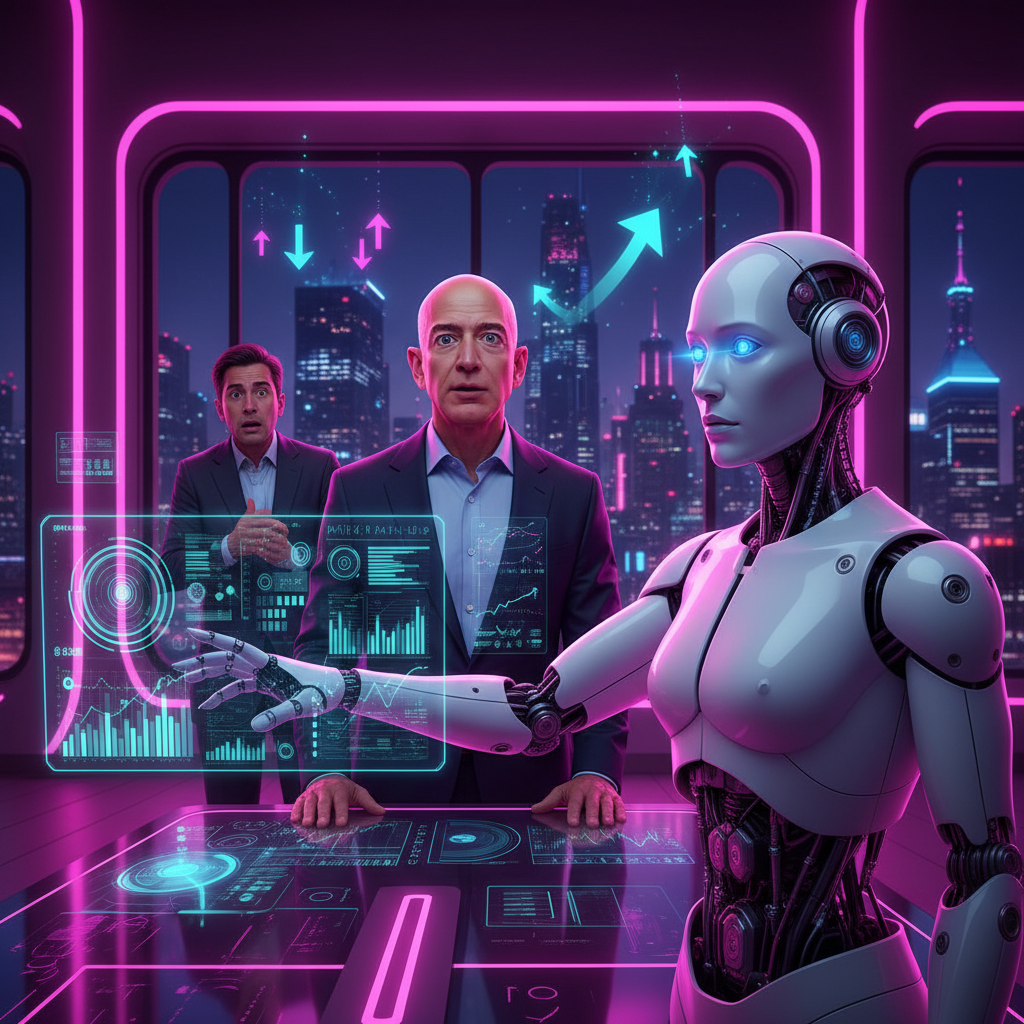
Unlocking the Future of Marketing: A Deep Dive into AI Predictive Marketing
The landscape of marketing is rapidly evolving, demanding foresight and precision like never before. Gone are the days when gut instinct and basic spreadsheets were enough to steer a brand toward success. Today, the ability to anticipate customer needs and market shifts is not just a luxury; it is a necessity for survival.
Imagine knowing exactly what your customer wants before they even realize it themselves. Picture a world where you can launch a campaign knowing in advance how well it will perform. This is not science fiction. This is the power of ai predictive marketing.
AI predictive marketing is a revolutionary approach that is enabling businesses of all sizes to anticipate and act on future trends with incredible accuracy. Instead of looking in the rear-view mirror to see what happened, marketers can now look through a telescope to see what is coming.
In this comprehensive guide, we will provide an informational and investigational overview of this cutting-edge field. We will explore how AI empowers marketers to predict customer behavior and optimize campaign outcomes. Our goal is to give you everything you need to know to harness the power of predictive analytics for marketing and transform your business strategy.
1. What Exactly is AI Predictive Marketing?
To understand the future, we must first define the tools that will take us there. AI predictive marketing is the application of advanced machine learning and statistical models to vast amounts of historical and real-time data. The goal is simple yet profound: to forecast future customer actions and then automatically adjust targeting, messaging, and offers based on those predictions.
Think of it as a weather forecast for your business. Just as meteorologists use data to predict rain or shine, marketers use ai predictive marketing to predict purchases, churn, and engagement.
From Reactive to Proactive
Traditional marketing analytics is often like driving a car while looking only at the rear-view mirror. You see clearly where you have been, but you have blind spots regarding what lies ahead. You might analyze a campaign report from last month to see what went wrong. By then, the money is spent, and the opportunity is lost.
AI enables a massive shift from reactive to proactive marketing. It allows marketers to move beyond simply reacting to past events to actively anticipating future ones. Instead of waiting for a customer to unsubscribe, AI alerts you that they are at risk of leaving, allowing you to intervene immediately.
The Core Function: Data and Algorithms
At its heart, ai predictive marketing leverages data and algorithms to make informed predictions in marketing decisions. It digests data from everywhere—your website, your emails, your sales records—and finds hidden patterns that no human could ever spot.
This is the essence of predictive analytics for marketing. It turns raw numbers into actionable foresight, giving you the confidence to make decisions that drive growth.
References:
Domo Glossary
StackAdapt Blog
IBM Topics
2. AI for Customer Behavior Prediction: Understanding Your Audience Before They Act
One of the most powerful applications of this technology is ai for customer behavior prediction. But how does it actually work?
AI analyzes vast datasets to build a complete picture of your audience. It looks at:
- Web and App Analytics: Which pages they visit and how long they stay.
- CRM Data: Their history of interactions with your sales team.
- Email and Ad Engagement: Which subject lines make them click.
- Purchase History: What they bought, when, and for how much.
- Demographics: Who they are and where they live.
By processing this information, AI identifies patterns and predicts future buying habits with startling accuracy. Here is how predictive analytics for marketing is changing the game in specific areas:
Churn Prediction
Losing a customer is costly. AI algorithms can detect subtle patterns that indicate a customer is likely to leave, also known as \”churn.\” This might be a slight drop in engagement, a change in usage frequency, or a negative interaction with support.
Before the customer actually cancels, the system can trigger a proactive retention campaign. You might send them a special discount or a helpful guide, saving the relationship before it is too late.
Purchase Intent
Not all visitors to your website are ready to buy. AI for customer behavior prediction helps you identify which customers have high purchase intent. It predicts who is likely to buy, exactly what they will buy, and through which channel they prefer to purchase.
This insight helps you time your campaigns perfectly. Instead of annoying a casual browser with hard-sell tactics, you can focus your energy on the users who are ready to convert, selecting the right offers to seal the deal.
Personalization and Recommendations
We have all seen \”Recommended for You\” sections on shopping sites. AI takes this to the next level. Models analyze browsing and purchase history to predict what content or products each specific person is most likely to respond to.
This powers dynamic website content that changes for every visitor, emails that feel hand-written, and ads that show the exact product a user was thinking about. It allows for tailored marketing campaigns to specific buyer personas to deepen customer engagement.
Customer Lifetime Value (CLV)
Not all customers are created equal. AI estimates the future revenue you can expect from each customer, known as Customer Lifetime Value (CLV). This helps you prioritize your acquisition and retention efforts. You can spend more to acquire high-value clients and work harder to keep them, ensuring your budget is focused where it yields the highest return.
References:
Domo Glossary
Harvard DCE Blog
SuperAGI Guide
Salesforce Guide
Snowflake Fundamentals
3. Powering Smarter Campaigns: The Impact of AI Campaign Prediction
Launching a marketing campaign often feels like a gamble. Will people click? Will they buy? With ai campaign prediction, you don’t have to guess.
AI campaign prediction forecasts the likely success and impact of marketing campaigns before they are launched. This allows you to simulate the future and tweak your strategy for maximum success.
Optimizing Ad Targeting and Budgets
Wasted ad spend is a massive problem for marketers. AI-driven predictive analytics for marketing solves this by enhancing ad targeting. It identifies the specific segments of people who are most likely to be interested in your ad.
Furthermore, it optimizes budgets by predicting which ads will perform best. It forecasts consumer behavior for smarter advertising decisions, ensuring every dollar you spend is working hard for you.
Channel and Creative Optimization
Should you spend more on Facebook or Google Ads? Should you use the blue image or the red one? AI systems can forecast channel and campaign performance across email, search, social, and programmatic advertising.
Based on these forecasts, the system can automatically adjust bids, budgets, and creatives to maximize Return on Investment (ROI). If the AI predicts that Instagram will drive more sales on a Saturday, it can shift your budget there automatically.
Lead Scoring
For B2B marketers, sifting through leads can be exhausting. AI models rank leads by their likelihood to convert. They look at behavior, demographics, and past interactions to assign a score to each prospect.
This allows sales and marketing teams to focus their precious time on the most promising prospects—the ones who are actually ready to buy.
Real-Time Adjustments
The market changes fast. AI campaign prediction allows for real-time creative adjustments. If a campaign isn’t hitting its predicted targets, the AI can tweak the messaging on the fly. It can also integrate with chatbots to ensure seamless customer journeys, guiding users toward conversion 24/7.
References:
IBM Topics
StackAdapt Blog
SuperAGI Guide
Harvard DCE Blog
4. Strategic Foresight: Leveraging AI Marketing Forecasting
While campaign prediction looks at specific initiatives, ai marketing forecasting takes a broader view. It is about seeing the big picture.
AI marketing forecasting uses AI to predict broader market trends, demand, and future campaign effectiveness to inform long-term strategic planning. It leverages historical data to forecast future events, allowing marketers to make faster, more informed decisions.
Demand Forecasting
Inventory management is a balancing act. Too much stock ties up cash; too little leads to missed sales. AI marketing forecasting helps retailers adjust prices and stock based on predicted spikes in demand.
If the AI predicts a surge in interest for a specific product category due to an upcoming trend, businesses can stock up early, enhancing competitiveness and keeping customers happy.
Sales Trends
Every business needs to know where its revenue is coming from. AI can predict future sales volumes and revenue with high precision. This assists with critical tasks like inventory management and budget allocation.
Knowing you will have a strong Q4 allows you to invest more in marketing Q3 to build momentum. Predictive analytics for marketing gives you the confidence to make these investments.
Market Shifts
Trends change overnight. What was popular yesterday might be obsolete tomorrow. AI excels at identifying emerging trends and adjusting messaging and offers in near real-time.
By spotting a shift in consumer sentiment early, you can pivot your strategy before your competitors even know what happened. This strategic foresight is invaluable in a crowded market.
References:
TierPoint Blog
Harvard DCE Blog
Aerospike Blog
5. The Tangible Benefits of AI Predictive Marketing
Why should your business invest in ai predictive marketing? The benefits are tangible, measurable, and transformative.
- Higher Conversion Rates and Campaign ROI: When you aim your resources at the people most likely to respond, your efficiency skyrockets. You stop wasting money on people who aren’t interested.
- Lower Churn and Higher Customer Lifetime Value (LTV): Proactive retention efforts keep your customers longer. Better customer experiences make them loyal fans.
- More Accurate Forecasts: Predictive analytics for marketing reduces the guesswork in planning and budgeting. You can rely on data, not hunches.
- Faster, Data-Driven Decisions: In the digital age, speed is everything. AI gives you the insights you need instantly.
- Enhanced Personalization: Tailoring marketing campaigns to specific buyer personas deepens customer engagement and builds trust.
- Competitive Advantage: By staying ahead of market changes and customer needs, you position your brand as a leader.
References:
SuperAGI Guide
Domo Glossary
Harvard DCE Blog
Snowflake Fundamentals
6. Implementing AI Predictive Marketing: Key Considerations
Adopting ai predictive marketing is a journey. Here are the key considerations to ensure your implementation is a success.
Data Quality and Unification
Your predictions are only as good as your data. There is a critical need for high-quality, clean, and unified first-party data. You need to connect data from all channels—web, app, CRM, email, campaigns—to create a single source of truth.
Ethical Implications and Privacy
With great power comes great responsibility. It is vital to align with consent, data minimization, and explainability requirements. When dealing with personal data, transparency is key. You must respect user privacy and comply with regulations.
Integration with Existing Systems
AI should not sit in a silo. You need seamless integration of AI tools with your current marketing automation, CRM, and analytics platforms. The insights generated by AI must flow directly into the tools you use to execute campaigns.
Skilled Personnel
While AI automates many tasks, it requires human oversight. You need teams with expertise in data science, machine learning, and marketing strategy to effectively implement and manage these solutions.
Starting Small and Measuring Incrementality
Don’t try to boil the ocean. Start small. Define clear prediction goals, such as \”predict which trial users will convert in 14 days.\” Use A/B tests to measure the incremental lift from your predictive strategies compared to your standard approach.
References:
Harvard DCE Blog
Mailchimp Resources
StackAdapt Blog
Conclusion
AI predictive marketing is not just a passing trend; it is a fundamental shift towards more intelligent, proactive, and customer-centric strategies. It is the tool that will define the winners in the next era of business.
By leveraging ai for customer behavior prediction, you can understand your audience on a deeper level. With ai campaign prediction, you can eliminate waste and maximize impact. And through ai marketing forecasting, you can navigate the future with confidence.
The future of marketing belongs to those who can predict it. Are you ready to stop guessing and start knowing?
Ready to transform your marketing strategy with AI? At BoosterDigital, we specialize in helping businesses leverage automation and data to drive growth. Contact us today to learn how we can help you unlock the power of predictive marketing.