
Mastering Paid Ads: How AI PPC Automation Drives Smarter Campaigns
The digital advertising landscape is changing fast. Competition is fierce, and platforms are becoming more complex every day. For business owners and marketers, manually managing campaigns is becoming a losing battle. You might feel like you are constantly chasing algorithms, trying to guess what works.
This is where ai ppc automation steps in.
Artificial Intelligence (AI) is no longer just a buzzword or a futuristic concept. It is a vital tool for modern advertisers who want to stay ahead. By leveraging ai for paid ads, businesses can move away from guesswork and towards data-driven success.
In this guide, we will explore the revolution of ai ppc automation. You will learn how it is transforming the way businesses manage and scale their paid ad efforts. We will look at how manual management is time-consuming and prone to error, and how AI offers a clear path to efficiency.
Whether you are running ads on Google or Facebook, this post will show you exactly how AI automates and optimizes your campaigns. The results speak for themselves. Research shows that agencies and advertisers using AI-driven PPC report 10–30% performance improvements in conversions and Return on Ad Spend (ROAS) compared to manual setups. Furthermore, manual adjustments are reduced by approximately 40%, which allows teams to scale and test much faster.
Ready to revolutionize your strategy? Let’s dive in.
Sources: iProspect, RevvGrowth, MonsterInsights
Understanding AI PPC Automation: The Core Concepts
To master your campaigns, you first need to understand what ai ppc automation actually is. It creates the foundation for every strategy we will discuss.
What is AI PPC Automation?
AI PPC automation is the use of machine learning algorithms to autonomously manage and optimize Pay-Per-Click campaigns. Instead of a human manually changing bids or turning ads on and off, the AI handles these tasks. It covers bidding, targeting, ad creation, and budget allocation in real-time.
Think of it as having a super-powered assistant who never sleeps. This assistant watches your campaigns 24/7 and makes smart decisions instantly.
How AI Works in Paid Ads
The magic of ai for paid ads lies in its ability to process information. Here is the mechanism behind the scenes:
- Data Analysis: AI collects and analyzes massive amounts of data. It looks at historical performance, user signals, and even your own first-party data like CRM lists or website analytics. It can see trends that a human eye would miss. Source: iProspect
- Machine Learning (ML): The system uses ML models to identify patterns. It predicts user behavior based on past interactions. It learns what a \”buyer\” looks like versus a \”browser\” and makes data-driven decisions to target the right one.
- Real-time Optimization: This is the most critical part of ai ad campaign optimization. AI systems make instantaneous adjustments based on live performance. If an ad is doing well at 2:00 PM on a Tuesday, the AI knows immediately and can push it harder. This speed far exceeds human capability.
Evolution from Traditional PPC
In the past, traditional PPC was entirely manual. Advertisers had to set bids for every keyword. They had to create every single ad variation and monitor performance spreadsheets daily. It was slow and reactive.
With ai for paid ads, we have moved to a proactive approach. The focus has shifted from \”turning knobs\” to strategy and creative direction. The efficiency gains are massive, allowing businesses to grow without hiring an army of ad managers.
How AI Automates and Optimizes Your Paid Ad Campaigns
Now that we know what it is, let’s look at the practical applications. How does ai ppc automation actually change the day-to-day management of your account? It drives superior ai ad campaign optimization in four key areas.
4.1. Automated Bidding Strategies
Bidding is the engine of any PPC campaign. In manual bidding, you set a maximum price you are willing to pay for a click. AI changes this completely.
AI dynamically adjusts your bids in real-time for every single auction. When a user searches for your keyword, the AI looks at hundreds of signals. It considers the device, location, time of day, operating system, and even the user’s past behavior. It predicts the probability of a conversion.
If the user is highly likely to buy, the AI bids higher. If they are unlikely to convert, it bids lower or not at all. This aligns with specific goals like Target CPA (Cost Per Acquisition) or Target ROAS (Return On Ad Spend). The result is that your bids are always optimal. This can reduce your Cost Per Click (CPC) by up to 20% while still maintaining your ad positions.
Sources: RevvGrowth, iProspect
4.2. Dynamic Ad Creation and Creative Optimization
Creating relevant ads for every single user is impossible for a human. For ai for paid ads, it is standard procedure.
AI tools facilitate dynamic ad creation. You provide the assets—headlines, descriptions, images, and videos—and the AI mixes and matches them. It tests these combinations at scale. It analyzes which headline works best with which image for a specific user context.
Platforms then serve the highest-performing assets dynamically. Examples of this include Responsive Search Ads (RSAs) on Google and Advantage+ Creative on Meta. This frees up significant time you would spend on A/B testing. It leads to better-performing ads and higher engagement rates because the user sees the version most likely to appeal to them.
4.3. Smarter Audience Targeting and Segmentation
Old-school targeting relied on static demographics, such as \”Females, ages 25-34, living in New York.\” AI ppc automation goes much deeper.
AI identifies and predicts users who are most likely to convert based on intent and online behavior. It looks at what users are doing, not just who they are. It refines audience segments dynamically and uncovers new \”lookalike\” audiences who behave similarly to your best customers.
By leveraging first-party data in a privacy-compliant way, AI ensures your ads are shown to the most relevant users. This increases conversion rates and can improve lead quality by up to 15%.
Source: iProspect
4.4. Optimized Budget Allocation and Pacing
Deciding how much money to give each campaign is often a guessing game. AI solves this with intelligent budget allocation.
AI algorithms monitor performance in real-time. If one campaign is driving cheap conversions and another is wasting money, the AI reallocates the budget to the winner. It maximizes your overall ROAS without you having to touch a button.
It also handles pacing. The AI ensures you don’t burn through your monthly budget in the first week. Conversely, it prevents underspending during peak performance periods. This ensures efficient use of every dollar you spend.
Source: RevvGrowth
AI in Action: Platform-Specific Automation (Google & Meta)
The theory is great, but how does this look on the platforms you use every day? Ai for paid ads manifests differently on Google and Meta, but the goal is the same: better results.
5.1. AI Google Ads Automation: Elevating Your Search and Display Campaigns
Google is the pioneer of machine learning in advertising. Ai google ads automation is now central to how the platform functions.
- Smart Bidding Strategies: Strategies like Target CPA and Maximize Conversions use auction-time bidding. They analyze context to hit your specific business goals. For example, Target ROAS focuses purely on the value of the cart, not just the click. Source: RevvGrowth
- Performance Max Campaigns: This is the ultimate \”black box\” automation. It is a unified campaign type that finds customers across Search, Display, YouTube, Discover, and Gmail. It uses machine learning to find high-performing audiences anywhere in the Google ecosystem. Source: MonsterInsights
- Dynamic Search Ads (DSA): Google’s AI crawls your website and automatically generates headlines and landing page links based on what the user searched for. This captures traffic that your keywords might miss.
- Impact: The results are tangible. Google’s Smart Bidding alone can raise conversion value by approximately 14% compared to manual CPC. Source: MonsterInsights
5.2. AI Facebook Ads Automation (Meta): Maximizing Social Campaign Success
Meta (Facebook and Instagram) uses ai facebook ads automation to combat signal loss from privacy changes (like iOS updates).
- Advantage+ Campaigns: These are fully automated campaigns designed for performance. Advantage+ Shopping Campaigns, for instance, automate targeting and creative delivery. They look for buyers outside of your defined interests to expand your reach. Source: RevvGrowth
- Dynamic Creative Optimization (DCO): You upload five images, three headlines, and two text options. Meta’s AI mixes them to find the perfect combo for each user.
- Lookalike Audiences: This is one of Meta’s most powerful AI tools. It analyzes your customers and finds millions of other people who \”look\” just like them mathematically.
- Impact: These tools significantly enhance audience expansion. They allow you to scale creative performance and drive better ROAS, even with broad targeting.
5.3. Other Platforms
It isn’t just the big two. Platforms like Amazon Ads are heavily investing in AI. They offer AI-powered PPC software to manage bids and search terms, helping sellers dominate the marketplace with limited manual work.
Source: Epinium
The Compelling Benefits of AI Ad Campaign Optimization
Why should you hand over the keys to the algorithm? The benefits of ai ad campaign optimization are clear and measurable.
6.1. Increased Efficiency and Time Savings
AI ppc automation handles the grunt work. It automates repetitive tasks like bid adjustments and negative keyword scrubbing. This frees up your marketing team.
Instead of staring at spreadsheets, your team can focus on strategy, creative angles, and improving your offer. Research suggests that manual adjustments can be reduced by around 40% when AI is fully utilized.
Source: iProspect
6.2. Higher ROI and Reduced Costs
AI makes decisions based on data, not emotion. This leads to more effective ad spend. By cutting waste and bidding more accurately, you lower your costs.
Agencies and advertisers using AI for PPC report 15–30% gains in ROI. Additionally, Real-time bidding (RTB) technology can lead to a 20% reduction in CPC while maintaining the same ad visibility.
Sources: iProspect, RevvGrowth
6.3. Enhanced Precision and Personalization
Relevance is the key to high conversion rates. AI’s predictive capabilities ensure that ads are delivered to the right person at the exact right moment.
This leads to a highly personal ad experience. It improves engagement, increases Click-Through Rates (CTR), and ensures higher conversion quality. You aren’t just getting more clicks; you are getting better clicks.
Source: iProspect
6.4. Scalability and Agility
Scaling a manual campaign is hard. You have to duplicate ad sets, recalculate bids, and monitor everything closely to avoid budget bleed. AI solves this.
AI for paid ads allows you to manage complex campaigns with thousands of keywords and audiences easily. It lets businesses adapt quickly to market trends. If a trend spikes, the AI captures it immediately, allowing you to scale without a proportional increase in manual labor.
The Human Touch: Balancing AI Automation with Strategic Oversight
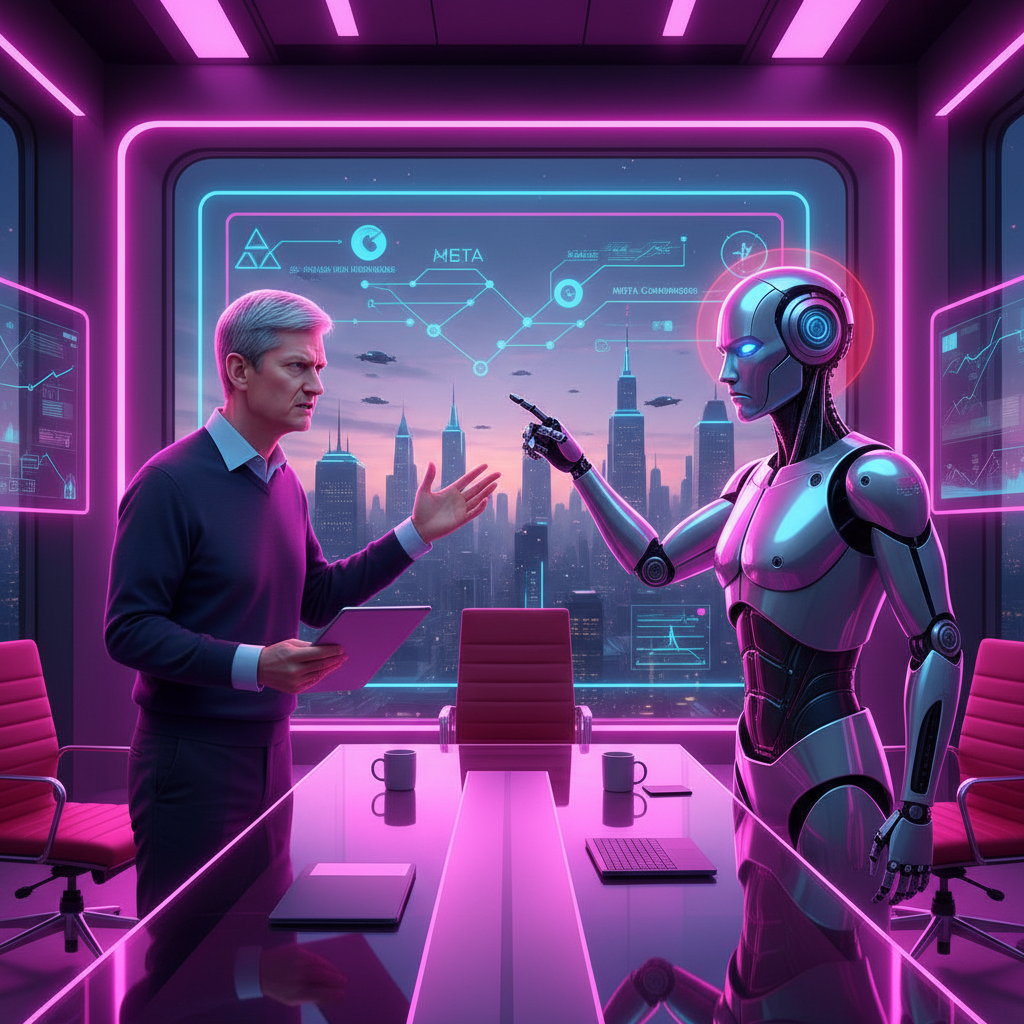
There is a common fear that AI will replace marketers. This is not true. While ai ppc automation is powerful, human strategy is indispensable. The rule of thumb is: \”AI takes the wheel, but you still hold the map.\”
What AI Excels At (Tactical Execution)
AI is perfect for calculation and execution. It handles auction-time bidding better than any human. It manages budget shifts within the parameters you set. It performs ongoing creative mix optimization and detects anomalies in data instantly.
What Humans Must Own (Strategic Direction)
AI cannot define your business goals. Humans must handle the strategic direction:
- Defining Goals and Guardrails: You must set the targets (ROAS, CPA, margins) and brand safety guidelines. You tell the AI what \”success\” looks like.
- Offer and Funnel Design: AI cannot write a compelling offer or design a high-converting landing page. It cannot fix a broken customer journey.
- Data Quality and Integrity: AI is garbage-in, garbage-out. Humans must ensure robust tracking is in place. You need to feed high-quality first-party data (like LTV and offline conversions) back into the platforms. Source: RevvGrowth
- Strategic Testing: Humans decide which new markets to enter or which new products to launch. AI then optimizes within those choices.
The Synergy
The most successful ai ad campaign optimization comes from collaboration. You provide the strategy and the creative; the AI provides the scale and the speed. Regular weekly reviews are essential to check search terms and placements, ensuring the AI isn’t drifting off course.
Source: TrafficGuard
Getting Started with AI PPC Automation: An Implementation Roadmap
Ready to switch from manual to automated? Here is a step-by-step roadmap to integrating ai ppc automation into your business.
8.1. Audit Your Current PPC Setup
Before you automate, you must audit. Review your existing campaign structures. Check your conversion tracking integrity. Identify areas that require heavy manual work, such as keyword management or bid changes. This highlights where AI will have the biggest impact.
Source: iProspect
8.2. Establish a Robust Data and Tracking Foundation
This is the most critical step. Implement robust tracking using tools like Google Tag Manager or Facebook CAPI (Conversions API). Ensure your primary conversions are clearly defined.
Remember, AI models are only as good as the data they receive. If you feed them partial data, you get partial results. Feed first-party data back into the platforms to supercharge the algorithm.
Source: RevvGrowth
8.3. Phase In Platform-Native AI Automation
Don’t flip the switch on everything at once.
- For AI Google Ads Automation: Start with 1 or 2 mature campaigns that have at least 30-50 conversions per month. Switch them to Smart Bidding (Target CPA or ROAS). Test Performance Max carefully. Source: RevvGrowth
- For AI Facebook Ads Automation: Begin by testing Advantage+ campaigns alongside your manual ones. Use dynamic creative optimization to find your winning ads.
Guidance: Be patient. AI needs a \”learning phase.\” Avoid making drastic changes to budgets or goals during the first two weeks.
8.4. Consolidate Campaign Structures for Signal Density
AI needs data volume. If you have 100 tiny campaigns, the data is too spread out. Consolidate them into fewer, stronger campaigns. This provides the AI models with more \”signal density,\” leading to faster learning and more stable performance.
Source: RevvGrowth
8.5. Implement Human Oversight and Regular Monitoring
Once live, don’t set and forget. Conduct weekly reviews. Look at pacing and efficiency. Check for waste, such as irrelevant search terms or poor placements.
Use the AI’s recommendations as suggestions, not orders. You know your brand better than the machine does.
Source: TrafficGuard
Conclusion: Embracing the Future of Paid Advertising with AI
The revolution of ai for paid ads is here, and it is reshaping the industry. We have seen how ai ppc automation creates efficiencies that manual management simply cannot match. From automated bidding to dynamic creative optimization, AI is redefining what is possible in digital marketing.
Adopting ai ad campaign optimization is not just about saving time; it is about securing the future of your business. It enables you to scale faster, bid smarter, and achieve a higher ROI.
If you are ready to stop guessing and start growing, it is time to embrace automation. But remember, the technology is only as good as the strategy behind it.
Do you want to implement AI in your campaigns but don’t know where to start? BoosterDigital can help. We specialize in blending world-class strategy with cutting-edge automation to drive real results.
Take your campaigns to the next level. Contact BoosterDigital today and let’s build your future together.